How to Remove Baby Food Stains From Bibs and Clothes: 6 Proven Methods That Actually Work
Watching that spoonful of bright orange sweet potato or deep purple blueberry puree land squarely on your baby’s favorite outfit can make your heart sink. Those vibrant baby food stains seem to set instantly and laugh in the face of regular washing, leaving you wondering if you’ll ever see those adorable little clothes looking pristine again.
This comprehensive guide breaks down six research-backed stain removal methods that actually work on even the most stubborn baby food stains. We’ve tested countless techniques and products to bring you the most effective, gentle solutions that protect your baby’s delicate fabrics while restoring them to their original condition.
Contents
- Quick Solutions Table
- 1. The Cold Water Rinse Method
- 2. The Enzyme Pre-treatment Method
- 3. The Dish Soap and White Vinegar Method
- 4. The Baking Soda Paste Method
- 5. The Fabric-specific Cleaning Method
- 6. The Stain-specific Treatment Method
- The Science Made Simple: Why Baby Food Stains Are So Stubborn
- Common Mistakes to Avoid
- Frequently Asked Questions
- Final Words
- Sources:
Quick Solutions Table
When baby food stains strike, you need fast solutions that actually work. This quick reference table matches the right cleaning method to your specific stain type and fabric, saving you time and preventing permanent damage. Keep in mind that these stains can also come from spilled formula or breast milk, which require special attention. Being aware of how to effectively remove formula and breast milk stains from fabric can save countless items from being ruined.
| Stain Type | Fabric Type | Best Method | Time Required | Success Rate |
|---|---|---|---|---|
| Fresh (under 30 minutes) | All fabrics | Cold Water Rinse | 5-10 minutes | 90-95% |
| Orange/Yellow (carrots, squash) | Cotton bibs | Enzyme Pre-Treatment | 30-60 minutes | 85-90% |
| Green (peas, spinach) | Polyester clothes | Dish Soap + White Vinegar | 15-20 minutes | 80-85% |
| Red/Purple (beets, berries) | Natural fibers | Baking Soda Paste | 2-4 hours | 75-80% |
| Protein-based (meat purees) | All fabrics | Cold Water + Enzyme | 1-2 hours | 85-90% |
| Set-in stains (over 24 hours) | Cotton/natural fibers | Fabric-Specific Method | 4-8 hours | 60-75% |
| Oil-based stains | Silicone bibs | Dish Soap Treatment | 10-15 minutes | 95% |
| Multiple stain types | Mixed fabrics | Stain-Specific Treatment | Varies | 70-85% |
Pro tip: Start with the gentlest method first. You can always move to stronger treatments if the initial approach doesn’t work completely.
Fresh stains respond beautifully to simple cold water, while older stains need more targeted approaches. The key is matching your cleaning method to both the stain’s age and the fabric type.
Keep this table handy during feeding times. Quick reference means faster action, and faster action means better results when removing baby food stains from bibs and clothes.
1. The Cold Water Rinse Method
How It Works
The cold water rinse method works by preventing stains from setting into fabric fibers while they’re still fresh and water-soluble. Cold water keeps protein-based stains from coagulating, which happens when heat causes proteins to bind permanently to fabric.
This method is particularly effective because baby food contains natural starches and sugars that dissolve easily in cold water before they have time to oxidize. The gentle flushing action removes surface particles without pushing them deeper into the weave.
What You’ll Need
- Cold running water (60°F or below)
- Clean white cloth or paper towels
- Small bowl or basin (optional)
- Spoon or dull knife for scraping
Step-by-step Instructions
For Fresh Stains
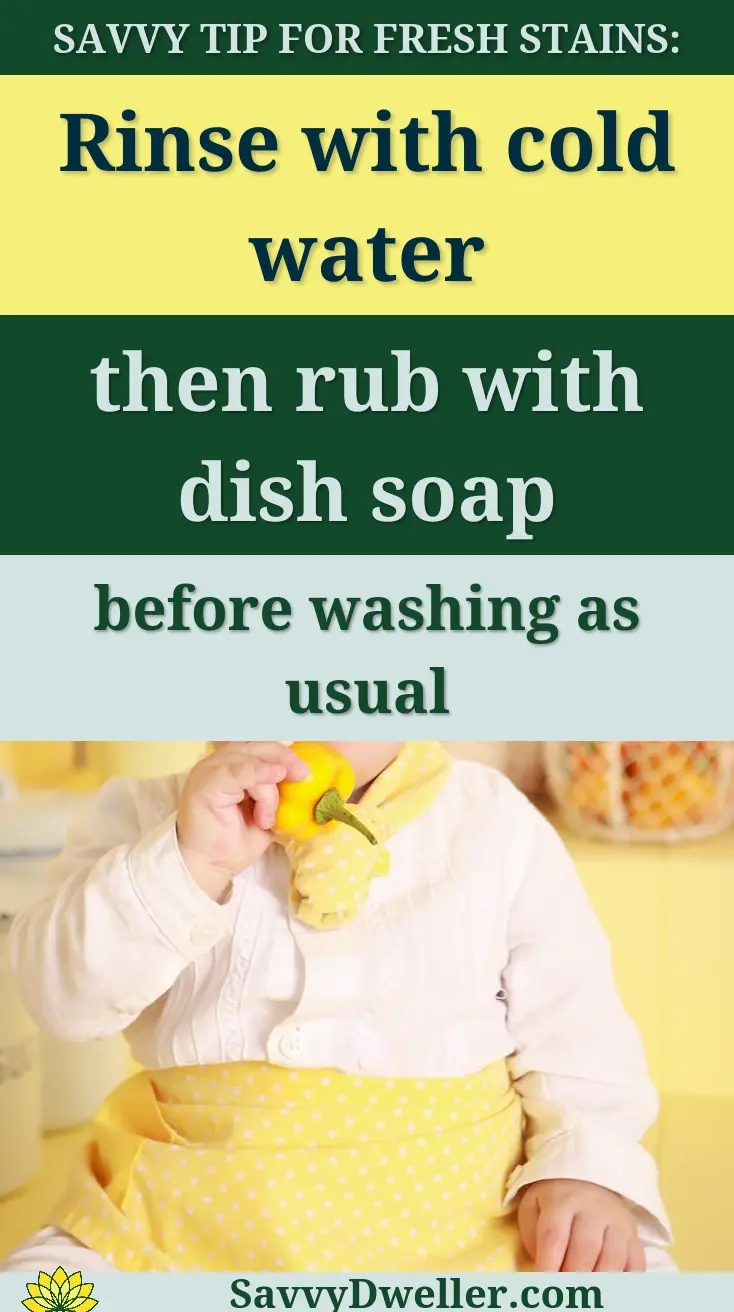
- Scrape off excess baby food immediately using a spoon, working from the outside of the stain toward the center
- Turn the stained fabric inside out and place it under cold running water
- Let the water flow through the back of the stain for 2-3 minutes, allowing it to push particles out rather than deeper in
- Gently blot with a clean white cloth to remove loosened particles
- Check if the stain is completely gone before proceeding to wash normally
For Set-In Stains
- Fill a bowl with cold water and submerge the stained area completely
- Let the fabric soak for 15-20 minutes to rehydrate dried particles
- Gently agitate the water with your fingers to help loosen stubborn bits
- Rinse under cold running water from the back of the stain
- Repeat the soaking process if stain remnants remain visible
- Pat dry with a clean towel and assess before moving to stronger treatment methods
2. The Enzyme Pre-treatment Method
How It Works
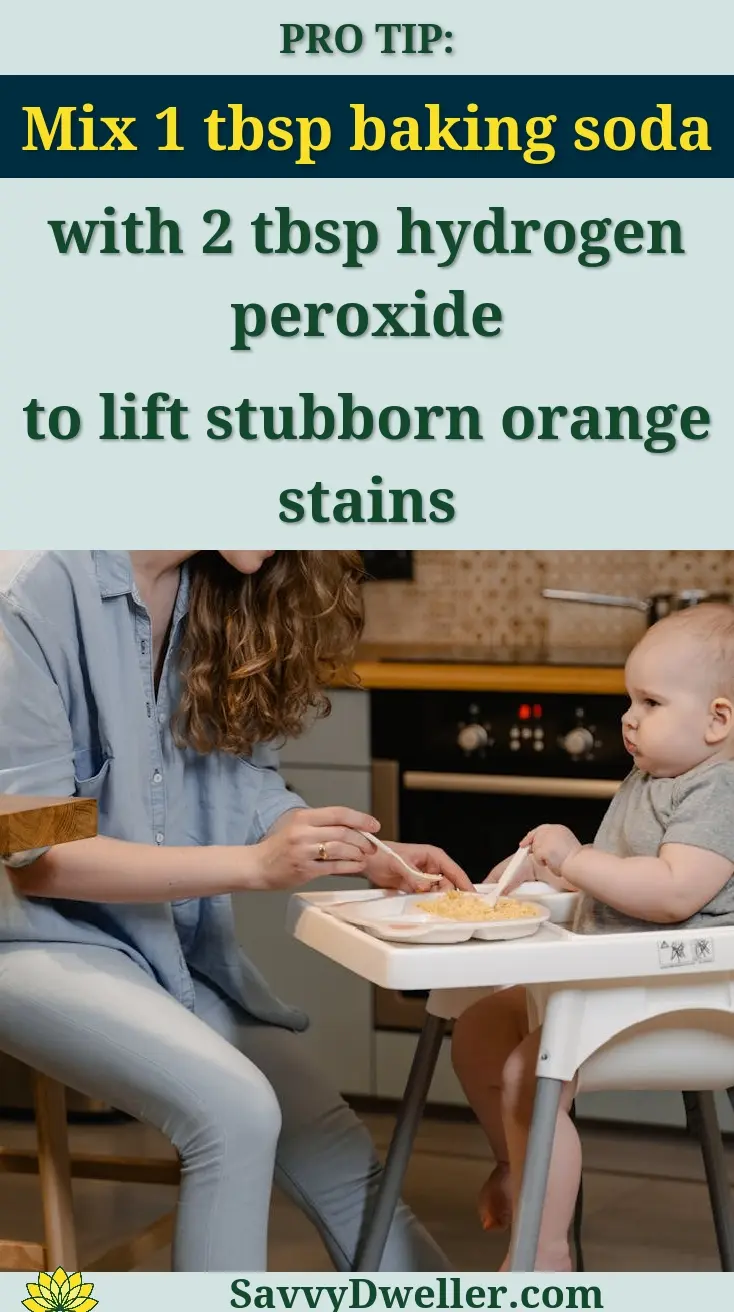
Enzyme pre-treatments contain specialized proteins that break down specific stain components at the molecular level. Different enzymes target different stain types: proteases break down proteins from meat-based foods, amylases tackle starches from vegetables, and lipases dissolve fats from pureed foods.
These biological catalysts work by essentially “eating” the stain compounds, converting them into smaller molecules that rinse away easily. The process requires time and proper conditions to be effective.
What You’ll Need
- Enzyme-based stain remover (like Carbona Stain Devils or Zout)
- Cold water
- Clean cloth for blotting
- Timer or clock
- Washing machine or basin for soaking
Step-by-step Instructions
Pre-Treatment Process
- Remove excess baby food by scraping gently with a spoon edge
- Apply enzyme pre-treatment directly to the stain, covering it completely
- Work the product into the fabric using your fingers or a soft brush, but avoid aggressive rubbing
- Let the enzyme treatment sit for the recommended time on the product label (typically 5-15 minutes)
- Check the stain periodically – you may see it beginning to lighten or change color
Soaking Guidelines
- Fill a basin with cold water and add a capful of enzyme detergent
- Submerge the pre-treated item completely in the enzyme solution
- Allow the fabric to soak for 30 minutes to 2 hours, depending on stain severity
- For stubborn stains, extend soaking time up to 8 hours or overnight
- Remove from soaking solution and proceed with normal washing in cold water
- Air dry to check results before using heat, which can set any remaining stain particles
Also See: The Best Stovetop Simmer Pot Recipes for a Great-smelling Home
3. The Dish Soap and White Vinegar Method
How It Works
This method combines the grease-cutting power of dish soap with the natural acidity of white vinegar to tackle complex baby food stains. Dish soap’s surfactants break surface tension, allowing water to penetrate fabric fibers, while vinegar’s acetic acid neutralizes alkaline stain compounds and brightens colors. Using vinegar in the washing machine can also help eliminate odors and soften fabrics naturally. Incorporating vinegar into your laundry routine is a simple, effective way to enhance cleaning performance and protect your clothes.
The combination works particularly well on mixed stains that contain both fats and pigments, like those from pureed fruits with added oils or cream-based baby foods.
What You’ll Need
- Liquid dish soap (Dawn or similar grease-fighting formula)
- White distilled vinegar
- Cold water
- Small mixing bowl
- Clean cloth or soft brush
- Measuring spoons
Step-by-step Instructions
Creating the Solution
- Mix 1 tablespoon liquid dish soap with 2 tablespoons white vinegar in a small bowl
- Add 1 cup of cold water and stir gently to combine without creating excessive suds
- Test the solution on an inconspicuous area of the fabric first to check for color fastness
- Adjust the concentration if needed – use less vinegar for delicate fabrics
Application Technique
- Blot away excess baby food with a clean cloth, working from outside edges toward the center
- Apply the soap and vinegar solution directly to the stained area using a clean cloth
- Gently work the solution into the fabric fibers using circular motions
- Allow the solution to penetrate for 10-15 minutes without letting it dry completely
- Rinse thoroughly with cold water, checking that all soap residue is removed
- Blot dry with a clean towel and assess the stain before proceeding to wash
- Wash in cold water using your regular detergent, then air dry to verify complete stain removal
4. The Baking Soda Paste Method
How It Works
Baking soda is a mild alkali and gentle abrasive that loosens stains without damaging fibers. It raises pH to break the bond between pigments/proteins and fabric, while fine particles lift residue from the weave.
This method supports baby food stain removal on both fresh and set-in marks. It’s safe on most bibs and clothes, and it helps with deodorizing after cleaning baby food.
What You’ll Need
- Baking soda
- Cool water (not hot)
- Small bowl and spoon
- Soft toothbrush or microfiber cloth
- Paper towels or a clean white cloth (for blotting)
- Optional: 1–2 drops clear dish soap (for greasy stains)
- Optional: 3% hydrogen peroxide (for whites only; spot test)
Step-by-step Instructions
- Lift solids: Use a spoon to remove any bits. Blot, don’t rub.
- Mix paste: Combine 3 parts baking soda with 1 part cool water. Aim for a spreadable, frosting-like paste.
- Apply: Spread a thin, even layer over the stain. Press gently so it contacts the fibers.
- Wait: Let it sit 15–30 minutes. Keep it damp by misting with water if it dries out.
- Agitate: Use a soft toothbrush with small circles. Work from the outside in to avoid spreading.
- Rinse: Flush with cool water. Repeat if the mark lightens but remains.
- Launder: Wash as the care label directs. Air dry first so you can check if the stain is gone.
For Protein-Based Stains
- Rinse in cool water first to keep proteins from setting.
- Make the baking soda paste and add 1 drop of dish soap if there’s visible fat.
- Apply, wait 20–30 minutes, then gently brush along the fabric’s grain.
- Rinse well and wash with a quality enzyme detergent. Air dry and inspect.
For Fruit and Vegetable Stains
- Blot with a damp cloth to remove juices without spreading.
- Apply the baking soda paste. For stubborn tannin/pigment stains, dot the surface with a few drops of cool water to keep the paste active.
- Let sit 15–20 minutes, then lightly brush and rinse.
- For white cotton, sun-dry for 30–60 minutes to brighten. For colors, air dry in shade and check before machine drying.
5. The Fabric-specific Cleaning Method
How It Works
Different fabrics hold stains differently, so matching the method to the material speeds up baby food stains removal. Natural fibers absorb more but release well with soaking; synthetics resist water yet cling to oils; silicone and waterproof surfaces need surface-focused cleaning. This is especially important when cleaning cloth diapers naturally, as using the right approach ensures effective stain removal without damaging the fabric.
This helps when figuring out how to remove baby food stains from bibs versus how to get baby food stains out of clothes made from polyester or cotton.
What You’ll Need
- Cool water and a gentle laundry detergent
- Baking soda and soft toothbrush
- Color-safe oxygen bleach (sodium percarbonate)
- Clear dish soap (to cut oils)
- Microfiber cloth or soft sponge
- Optional: 3% hydrogen peroxide for whites, rubbing alcohol for green stains (spot test)
Step-by-step Instructions
- Check the care label and identify the fabric type.
- Spot test any new product on a hidden area.
- Use the fabric-specific steps below to remove baby food from clothes or bibs effectively.
- Wash on the recommended cycle and temperature for the fabric.
- Air dry first. If any mark remains, repeat before heat-drying.
Cotton and Natural Fiber Bibs
- Rinse the spot with cool water from the back of the fabric.
- Pre-treat with a baking soda paste. For greasy purees, add 1 drop of dish soap.
- For persistent stains, soak 30–60 minutes in cool water with color-safe oxygen bleach.
- Wash on warm (not hot) with a strong detergent. Air dry and check.
Polyester and Synthetic Clothes
- Blot, then apply a small amount of dish soap directly to the stain to tackle oils that make getting baby food out of clothes tricky.
- Add a thin layer of baking soda paste on top and let sit 15–20 minutes.
- Rinse well, then wash on cool-to-warm with detergent. Skip fabric softener, which can lock in residue.
- Air dry. If faint shadows remain, repeat rather than increasing heat.
Silicone and Waterproof Bibs
- Wipe off solids, then wash with warm, soapy water using a soft sponge.
- Sprinkle a little baking soda on greasy or stained spots, rub gently, and rinse.
- For lingering odors or color, soak 10 minutes in a 1:10 white vinegar to water mix, then rinse well. Do not mix vinegar with any bleach.
- Air dry or top-rack dishwasher if the manufacturer allows. Avoid abrasive pads that can scratch coatings.
6. The Stain-specific Treatment Method
How It Works
Target the chemistry of the stain, and you speed up baby food stain removal from clothes and bibs. Orange/yellow stains are oily pigments, greens are plant chlorophyll, reds/purples are pH-sensitive fruit dyes, and browns are protein plus fat.
This approach makes how to get baby food stains out of bibs and how to remove baby food from clothes faster and more reliable.
What You’ll Need
- Cool water, baking soda, clear dish soap
- White vinegar (for tannin/fruit), lemon juice (for whites only; spot test)
- Color-safe oxygen bleach
- 3% hydrogen peroxide for whites (spot test)
- Rubbing alcohol (for green/chlorophyll on colorfast fabrics)
- Soft toothbrush, microfiber cloth
Step-by-step Instructions
- Identify the stain color/type below.
- Pre-rinse with cool water to remove loose residue.
- Apply the matching treatment steps for fast baby food stain removal from clothes or bibs.
- Wash per care label. Air dry and re-treat if needed.
Orange and Yellow Stains (Carrots, Sweet Potatoes)
- Apply a pea-sized drop of dish soap to cut the oily carotenoids; massage gently.
- Layer on a baking soda paste and rest 15–20 minutes.
- Rinse. If stain lingers, soak in oxygen bleach solution for 30 minutes (safe for colors).
- For white cotton, sun-dry to brighten, then launder. This sequence helps get baby food stains out of clothes that seem “stuck.”
Green Stains (Peas, Spinach, Broccoli)
- Blot, then dab the area with a cloth lightly moistened with rubbing alcohol (spot test first). Chlorophyll dissolves better with alcohol than water.
- Rinse, apply baking soda paste for 10–15 minutes, and lightly brush.
- Rinse and wash. If needed, follow with a short oxygen bleach soak.
Red and Purple Stains (Beets, Berries)
- Rinse in cool water. Avoid rubbing at first to keep dyes from spreading.
- Apply a 1:3 white vinegar to water solution for 5–10 minutes to neutralize the fruit dyes.
- Rinse, then use baking soda paste for another 10 minutes to lift remaining color.
- Wash and air dry. For whites, a brief oxygen bleach soak helps remove food stains from baby clothes fully.
Brown Stains (Meat-Based Foods)
- Rinse with cool water right away. These stains contain protein and fat.
- Add a drop of dish soap to break grease, then apply baking soda paste for 20 minutes.
- Rinse well and wash with a detergent that contains enzymes.
- Air dry and inspect before heat-drying. This sequence is reliable when you need to remove baby food stain from clothes after a messy meal.
The Science Made Simple: Why Baby Food Stains Are So Stubborn
Natural Pigments and Tannins
Baby foods are loaded with plant pigments that behave like natural dyes. Carotenoids (orange/yellow from carrots and sweet potatoes), chlorophyll (green from peas and spinach), and anthocyanins (red/purple from berries and beets) latch onto fabric and resist plain water.
Tannins in fruits and veggies grip fibers even harder, especially when they meet minerals in tap water. That’s why baby food stains removal needs the right approach-not just more scrubbing.
Protein and Fat Content
Protein from formula, dairy, or meat “cooks” onto fabric with heat, just like an egg on a pan. Once proteins set, remove baby food stain from clothes gets tougher because the bonds tighten inside the fibers.
Fats act like tiny raincoats, making water-based cleaners slide off. You need surfactants (dish soap) to break up the grease and enzymes to snip protein and starch fragments for better baby food stain removal from clothes.
Why Quick Action Matters
Stains spread fast as liquids wick through fibers and then “lock in” as they dry. The sooner you act, the less pigment, protein, and fat get time to settle and oxidize.
A simple, fast response often decides whether you can get baby food stains out of clothes in one wash. Use these quick steps for getting baby food out of clothes and bibs before it sets.
- Lift solids with a spoon or dull knife; don’t push the mess deeper.
- Blot with a clean cloth from the edges toward the center.
- Rinse the back of the stain with cold water to flush it out of the fibers.
- Keep the spot damp until you pre-treat; dry time sets stains.
- Pre-treat based on stain type (protein, fat, or pigment), then launder per label.
Common Mistakes to Avoid
Using Hot Water on Fresh Stains
Hot water denatures proteins and bakes pigments into the weave. That turns easy cleaning baby food into a set stain that needs heavy treatment.
Start cool, then turn up the temperature only after pre-treatment. This keeps options open for how to remove baby food stains without making them permanent.
- Rinse with cold water from the back of the fabric.
- Apply your pre-treatment (enzyme for protein, dish soap for fat, oxygen-based for pigments).
- Launder warm only after the stain looks lighter at the sink.
Rubbing Instead Of Blotting
Rubbing grinds particles deeper and roughs up fibers, causing a faint “shadow” stain. It also spreads the spot, especially on knits and cotton bibs.
Blotting lifts; rubbing drives in. This small switch speeds up how to remove baby food from bibs and avoids damage.
- Place a white towel under the stain.
- Blot with another clean cloth, working from the outside in.
- Refresh the towel spot so you’re always lifting onto a clean area.
Putting Stained Items in the Dryer
Dryer heat “sets” what’s left, making baby food stains removal far harder the second time. Even faint stains can darken after a hot cycle.
Air-dry until you’re sure the spot is gone. That way, you can still get baby food stains out of clothes with another round if needed.
- After washing, inspect in bright light while the fabric is still wet.
- If any shadow remains, repeat pre-treatment and wash again.
- Air-dry or tumble with no heat until the stain is fully gone.
Using Bleach on Colored Fabrics
Chlorine bleach can strip dyes and even yellow protein stains. It turns “how to remove baby food from clothes” into “how to fix faded patches.”
In some cases, it can be challenging to remove dye transfer stains from clothes without causing damage.
Use oxygen-based, color-safe bleach instead, and always spot test. This protects colors while you remove food stains and other stains baby clothes deal with daily.
- Check the care label for “no bleach” or “color-safe only.”
- Mix oxygen bleach per package directions; test a hidden seam.
- Soak or wash as directed, then recheck before drying.
Ignoring Care Label Instructions
Different fibers behave differently: cotton drinks stains; polyester holds oil; wool and silk dislike enzymes. Skipping the label can undo your baby food bib cleaning work.
The label tells you the safest water temp, products, and cycle. Follow it to get baby food stains out of bibs and clothes without stretching, fading, or peeling finishes.
- Find the fiber content and wash symbols on the tag.
- Match your method: cool water for fresh stains, enzyme-free for wool/silk, gentle cycle for coated or waterproof bibs.
- Test any new product on an inside seam before full treatment.

Frequently Asked Questions
How Can I Prevent Baby Food Stains From Occurring in the First Place?
To minimize stains, use bibs with full coverage, such as long-sleeved or silicone bibs that catch spills. During feedings, opt for darker-colored clothes that hide stains better, and try to wipe your baby’s mouth and bib immediately after eating to reduce the amount of food that sets into fabric. Additionally, applying a thin layer of petroleum jelly around your baby’s mouth before feeding can create a barrier that makes cleanup easier.
Are Vinegar and Baking Soda Safe to Use on Baby Clothes and Bibs?
Yes, both are generally safe and natural options, but always test on a small, hidden area first to check for colorfastness. White vinegar helps break down stains and odors, while baking soda and vinegar acts as a gentle abrasive. When considering their use for cleaning tough surfaces like your oven, the combination of baking soda and vinegar becomes particularly effective. However, ensure you rinse the items thoroughly after use to prevent any residue that might irritate your baby’s sensitive skin.
What Should I Do if a Baby Food Stain Doesn’t Come Out After Washing?
If a stain persists, avoid putting the item in the dryer, as heat can set the stain permanently. Instead, repeat the pre-treatment process with an enzyme-based cleaner or try an alternative method, like sun bleaching: lay the damp, treated fabric in direct sunlight, which can naturally fade stains. For stubborn cases, consider using a color-safe oxygen bleach soak following product instructions. If these techniques don’t work, there are last resort methods designed specifically for stains that have been washed and dried, which can help restore your fabric to its original condition.
Can I Use Regular Laundry Detergent for Baby Food Stains, or Do I Need a Special Product?
Regular detergent can work, but for best results, pair it with a pre-treatment method like dish soap or an enzyme spray to tackle the proteins and pigments in baby food. If your baby has sensitive skin, opt for a hypoallergenic, baby-specific detergent that is free from dyes and fragrances to reduce the risk of irritation while still effectively cleaning stains.
Final Words
You’ve now got six proven methods to tackle even the most stubborn baby food stains that have been testing parents for generations. The key to success lies in acting quickly and choosing the right method for your specific stain and fabric type. Remember that fresh stains respond best to cold water and gentle blotting, while set-in stains need the power of enzyme treatments or specialized solutions.
Don’t get discouraged if the first method doesn’t completely remove a particularly tough stain. Sometimes combining techniques – like starting with cold water, following up with enzyme treatment, and finishing with the baking soda paste method – gives you the breakthrough you need. Each baby food stain teaches you something new about effective cleaning strategies.
Ready to put these methods to the test on your little one’s messy clothes and bibs? Start with the cold water rinse for any fresh stains you encounter today, then bookmark this guide for future reference. For more practical parenting solutions and home cleaning tips that actually work, check out Savvy Dwelling where we share research-backed advice to make your daily life easier.