
5 Clever Tricks to Keep Squirrels Out Of Bird Feeders (That Actually Work)
Watching squirrels perform death-defying acrobatics to raid your bird feeders can be entertaining for about five minutes. Then it becomes maddening as they devour expensive birdseed, scare away the birds you’re trying to attract, and turn your peaceful backyard into their personal buffet.
We’ve tested dozens of squirrel-proofing methods and found five that consistently work without harming these clever critters. This guide breaks down each technique with step-by-step instructions, so you can finally enjoy watching birds instead of frustrated squirrels outsmarting your latest contraption.
Contents
- At a Glance: The Best Solutions
- The Science Made Simple: Why Squirrels Raid Bird Feeders
- 1. Strategic Feeder Placement – the 5-10-4 Rule
- 2. Squirrel Baffles – Creating an Unclimbable Barrier
- 3. Weight-activated Squirrel-proof Feeders
- 4. Natural Deterrents – Spices and Scents Squirrels Avoid
- 5. Distraction Feeding Stations – Give Them What They Want Elsewhere
- When Your Tricks Stop Working – Troubleshooting Common Issues
- Common Mistakes That Actually Attract More Squirrels
- Frequently Asked Questions
- Final Words
At a Glance: The Best Solutions
Quick Comparison Table
Effectiveness Ratings and Setup Requirements
Not all squirrel-deterrent methods are created equal. Some work instantly but need daily upkeep, while others demand a bit of setup but pay off with long-term peace of mind. Matching the right strategy to your yard layout, budget, and patience level is key to successfully keeping squirrels out of bird feeders.
| Method | Effectiveness Rating (1-5) | Setup Difficulty | Maintenance Needed | Best For |
|---|---|---|---|---|
| Strategic Feeder Placement (5-10-4 Rule) | 4 | Medium | Low | Open yards with clear boundaries |
| Squirrel Baffles | 5 | Low to Medium | Low | Pole- or hanging-mounted feeders |
| Weight-Activated Feeders | 5 | Low | Medium | Busy households wanting hands-off protection |
| Natural Deterrents (Spices/Scents) | 3 | Low | High | Temporary fixes or supplemental use |
| Distraction Feeding Stations | 4 | Medium | High | Large yards with space to separate zones |
If you’re wondering how to keep squirrels away from your bird feeder without constant babysitting, baffles and weight-activated feeders are your most reliable allies. For those asking “how can I keep squirrels out of my bird feeder?” the answer often lies in combining placement rules with a physical barrier.
- Start with placement. Follow the 5-10-4 Rule: position your feeder at least 5 feet off the ground, 10 feet away from any jumping point (like trees or fences), and 4 feet below any overhead access.
- Add a baffle if mounting on a pole or hanging from a branch-it blocks climbing without harming wildlife.
- If squirrels still win, upgrade to a certified squirrel-proof bird feeder with a weight-sensitive perch that closes access when a heavier animal lands.
- Tape measure
- Sturdy metal or dome baffle (minimum 16” diameter)
- Adjustable-height shepherd’s hook or pole system
- Squirrel-resistant feeder with spring-loaded ports
Trying to prevent squirrels from getting bird feeders? Remember: consistency beats cleverness. A half-installed baffle or an inconsistently stocked distraction station will only train squirrels to be more persistent.
The Science Made Simple: Why Squirrels Raid Bird Feeders
Understanding Squirrel Behavior and Motivation
Squirrels aren’t being mischievous just for fun—they’re hardwired to seek out high-calorie food sources, especially in preparation for colder months. Bird feeders offer an easy, reliable buffet of sunflower seeds, peanuts, and other nuts that meet their nutritional needs perfectly. Similarly, adding nutrient-dense foods like flax seeds to your diet can support your health. Flax seeds are packed with omega-3 fatty acids and fiber, making them an excellent choice for a balanced diet.
Keeping squirrels out of bird feeders starts with recognizing that they’re not pests out of spite-they’re opportunistic foragers responding to what your yard provides. Their excellent memory helps them recall feeding spots, and they’ll return daily if rewarded.
The Athletic Abilities That Make Them So Successful
Eastern gray squirrels can leap up to 9 feet horizontally and scale vertical surfaces with ease thanks to rotating ankle joints and sharp claws. They can even hang upside down and chew through plastic, wood, and thin metal.
When figuring out how to keep squirrels away from bird feeders, never underestimate their problem-solving skills-they’ve been observed mimicking bird movements to trigger weight-sensitive feeders. This blend of agility, intelligence, and persistence is why simple deterrents often fail.
1. Strategic Feeder Placement – the 5-10-4 Rule
How the Distance Formula Works
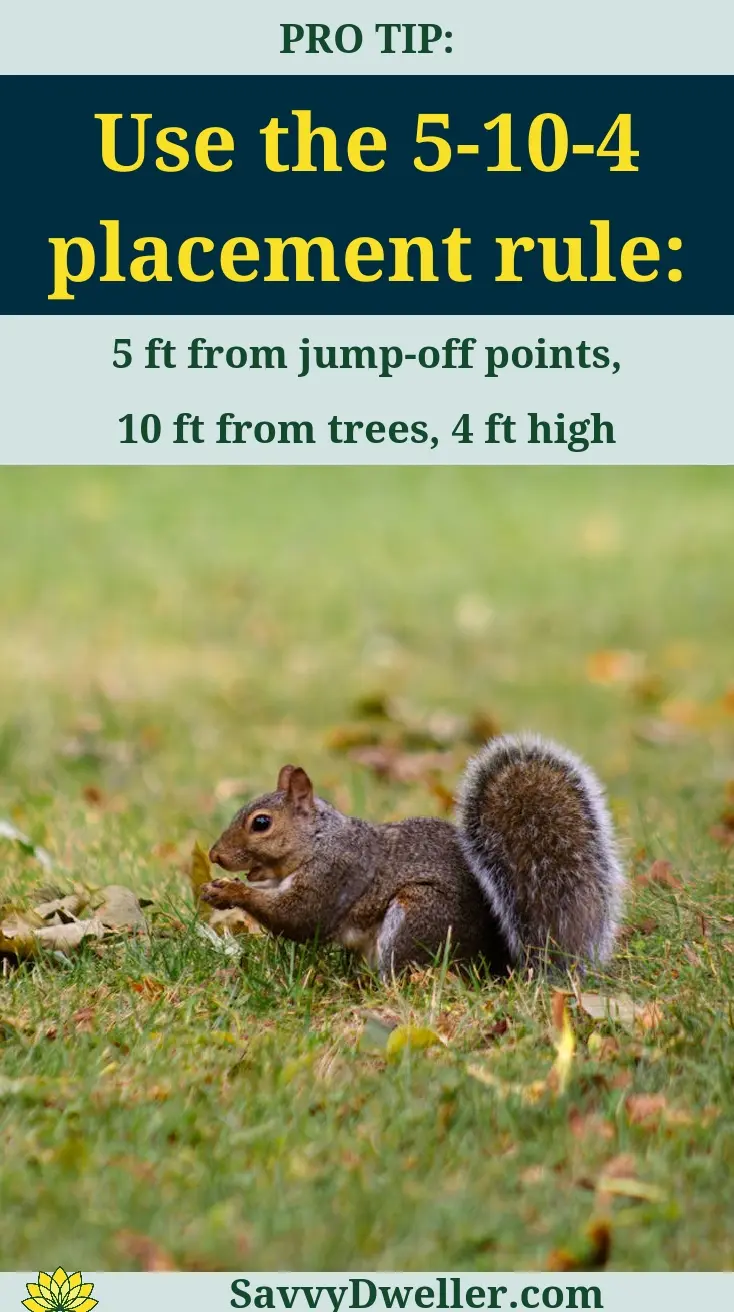
The 5-10-4 Rule is a proven spatial guideline: place your bird feeder at least 5 feet off the ground, 10 feet away from any structure or tree a squirrel could jump from, and 4 feet below any overhead branch. This triangle of clearance disrupts their launch points and climbing routes.
It’s one of the most effective non-mechanical ways to keep squirrels out of bird feeders without spending a dime on gadgets.
Step-by-step Positioning Guide
Measuring Your Setup Area
- Grab a 10-foot measuring tape or use a marked rope.
- Identify the nearest tree, fence, deck railing, or roof overhang.
- Measure 10 feet outward from that surface in all directions-this is your “no-jump zone.”
- Check overhead: ensure branches are trimmed back to at least 4 feet above the feeder height.
- Confirm the feeder hangs or mounts at 5 feet or higher from the ground.
Common Placement Mistakes to Avoid
- Mounting feeders on deck railings (squirrels climb railings like ladders).
- Placing near shrubs or woodpiles that serve as hidden launchpads.
- Hanging feeders from low tree limbs they can easily access.
- Ignoring rooflines or gutters-squirrels use them as aerial highways.
Best Mounting Options for Different Yard Types
In open yards, a freestanding pole system with a baffle works best. For urban or small spaces, consider wall-mounted feeders on smooth siding with no nearby footholds. If you’re surrounded by trees, choose a retractable pulley system to hang the feeder in a cleared canopy gap. To enhance your outdoor space, explore natural methods for mosquito control. Implementing these strategies can help create a more comfortable environment in your backyard.
No matter your setup, consistency with the 5-10-4 Rule is key to long-term success in keeping squirrels out of your bird feeder.
Also See: How to Deep Clean and Deodorize a Smelly Mattress in 5 Simple Steps
2. Squirrel Baffles – Creating an Unclimbable Barrier
Types Of Baffles That Actually Work
Not all baffles are created equal. Effective ones force squirrels to confront a smooth, sloped, or slippery surface they can’t grip or climb over. The design must fully encircle the pole or hang above the feeder without gaps.
Pole-Mounted Baffles
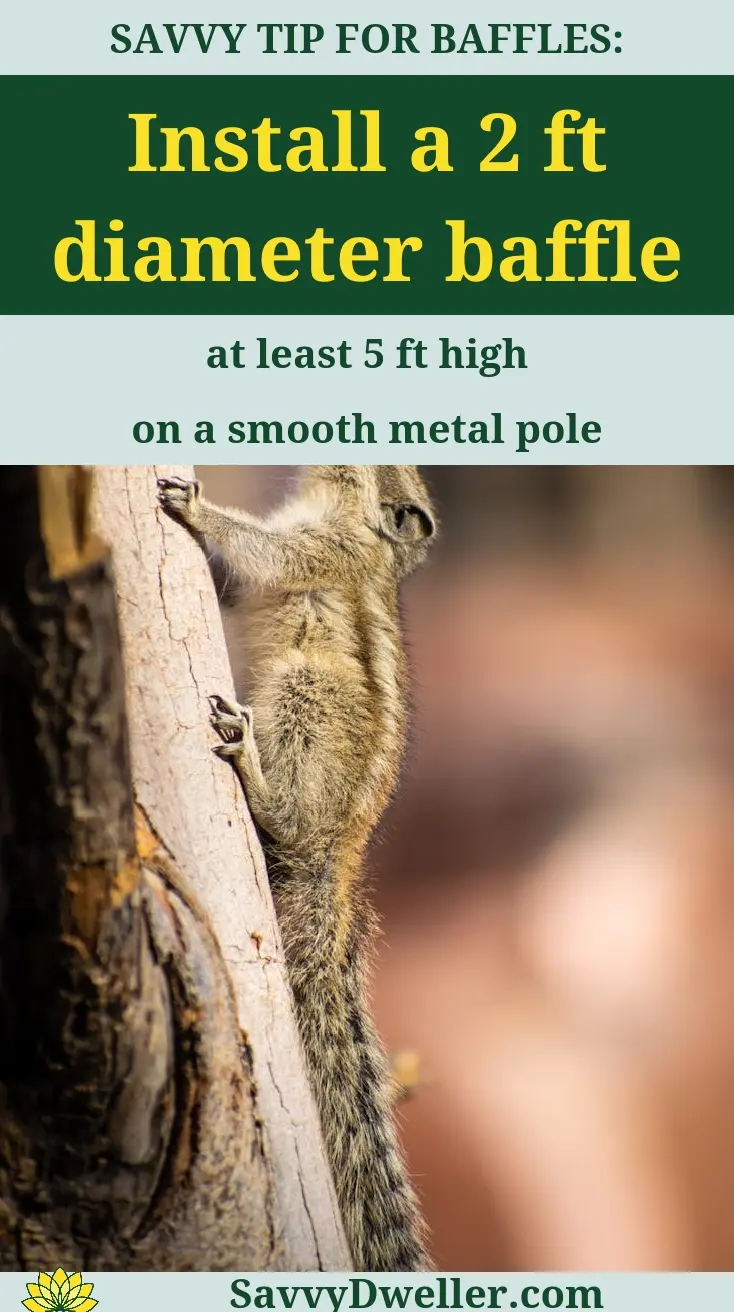
These cone- or dome-shaped shields attach below the feeder on a pole. They should be at least 18 inches wide and made of metal or slick plastic. A properly installed pole baffle stops climbing attempts dead in their tracks.
Hanging Baffles
For feeders suspended from branches or hooks, inverted dome baffles (often called “satellite” or “umbrella” baffles) must be placed directly above the feeder. They prevent squirrels from descending from above-a common tactic many forget to block.
Installation Requirements and Materials Needed
- Sturdy metal or polycarbonate baffle (minimum 16–18 inches in diameter)
- Secure mounting hardware (screws, clamps, or zip ties rated for outdoor use)
- Level surface or straight pole for stable attachment
- Measuring tape to ensure correct height (baffle should sit 4–5 feet above ground)
DIY Baffle Solutions Using Common Household Items
You don’t need a specialty store to build a working barrier. A cleaned plastic laundry detergent bottle (cut lengthwise) can be slipped over a hanging wire as a mini baffle. For poles, stack two large plastic bowls back-to-back and secure them with waterproof tape-the slippery curve deters climbing.
Even a repurposed vinyl record (mounted on a pole) can work in a pinch-its smooth, angled surface confuses and repels squirrels trying to get to your feeder. Just ensure your DIY solution fully blocks upward or downward access with no ledges to grab.
3. Weight-activated Squirrel-proof Feeders
How Weight-sensitive Mechanisms Function
Weight-activated feeders use a spring-loaded perch or feeding port that closes when a heavier animal-like a squirrel-lands on it. Most small birds weigh under 2 ounces, so they don’t trigger the mechanism. But squirrels, typically weighing 12–24 ounces, cause the perch to drop or the feeding holes to shut, cutting off access to the seed.
These squirrel-proof bird feeders physically block access rather than relying on taste or scent, making them one of the most reliable methods for keeping squirrels out of bird feeders.
Top Features to Look for When Shopping
Adjustable Weight Settings
Not all backyard visitors are the same size. Look for models that let you fine-tune the trigger weight. This ensures larger birds like cardinals or jays can still feed while squirrels are locked out.
- Adjustable range between 2–6 ounces
- Tool-free calibration
- Clear indicator marks for weight settings
Durability and Weather Resistance
Squirrels chew. Rain pours. UV rays fade. A quality squirrel-proof bird feeder should withstand all three. Metal components (especially chew-resistant steel) and UV-stabilized plastic or polycarbonate bodies hold up best over time.
Feeders with powder-coated metal parts and sealed seed chambers offer long-term protection against both squirrels and the elements.
Maintenance Tips for Long-term Success
- Clean the spring mechanism monthly with a soft brush to prevent seed buildup from jamming it.
- Check for chew marks on perches or housing every two weeks-replace worn parts immediately.
- Store extra seed in airtight containers to avoid attracting rodents that might damage the feeder base.
4. Natural Deterrents – Spices and Scents Squirrels Avoid
Safe Spice Blends to Mix With Birdseed
Birds lack the receptors to sense capsaicin—the compound that makes peppers hot—while mammals like squirrels find it intensely irritating. This makes spicy additives a safe, non-toxic way to prevent squirrels from bird feeder access without harming your feathered guests. Interestingly, cayenne pepper, which contains capsaicin, is known for its unexpected health benefits, including boosting metabolism and reducing inflammation.
Cayenne Pepper Application Method
- Measure 1 tablespoon of food-grade cayenne pepper per 5 pounds of birdseed.
- Place seed and pepper in a large resealable bag or bucket with a tight lid.
- Shake vigorously for 30 seconds to evenly coat every kernel.
- Refill your feeder immediately-moisture reduces effectiveness over time.
Reapply every time you refill, especially after rain or high humidity.
Safflower Seed as a Natural Squirrel Repellent
Safflower seed has a bitter taste that most squirrels dislike, yet it’s loved by cardinals, chickadees, and doves. Switching your main seed to safflower is a passive, long-term strategy for how to keep squirrels away from your bird feeder.
Start with a 50/50 mix if you’re transitioning, then go full safflower once birds adapt.
Essential Oil Barriers Around Feeder Areas
Peppermint, eucalyptus, and garlic essential oils can create invisible scent barriers. Soak cotton balls in 5–10 drops of oil and tuck them into hanging hooks, pole bases, or nearby branches. Replenish every 3–4 days. Incorporating natural deodorizing tips can further enhance your home’s freshness. From vinegar solutions to baking soda, there are plenty of ways to maintain a pleasant scent without harsh chemicals.
Never apply oils directly to feeders or seed-use only as perimeter deterrents to keep squirrels off bird feeder zones. Essential oils can also be effective in repelling pests like fleas from dogs when used properly. Exploring the best essential oils for this purpose can help ensure your furry friends are comfortable and free from irritating invaders.
Plant-based Deterrents for Your Garden
Certain plants naturally repel squirrels due to their scent or texture. Consider adding these near your feeding station: Some plants can also help keep rabbits away from your yard. Incorporating plants that repel rabbits can create a more peaceful garden environment while keeping the critters at bay.
- Daffodils (toxic to squirrels)
- Lavender (strong aroma deters digging)
- Marigolds (bitter taste and pungent smell)
- Alliums (onion-family bulbs squirrels avoid)
5. Distraction Feeding Stations – Give Them What They Want Elsewhere
Setting Up a Dedicated Squirrel Feeding Area
Create a separate zone far from your bird feeders stocked with foods squirrels crave. This satisfies their foraging instinct without compromising your birdwatching. Place it near trees or fences they already use as travel corridors.
Distraction feeding is one of the most humane and effective ways to keep squirrels out of bird feeders long-term.
Best Foods to Keep Squirrels Happy and Away
Corn and Nut Placement Strategy
- Use whole ears of dried corn or shelled walnuts, peanuts (unsalted), and almonds.
- Place food in a ground-level platform or sturdy log with drilled holes to hold nuts.
- Refresh every morning to establish a routine-they’ll return to the same spot daily.
Timing Your Squirrel Feeder Refills
Squirrels are most active at dawn and dusk. Refill their station early in the morning so it’s full before their first foraging wave. A consistent schedule conditions them to ignore the bird feeder entirely.
Irregular refills send them searching elsewhere-including back to your birdseed.
Distance Requirements Between Bird and Squirrel Feeders
Place the squirrel station at least 20 feet from any bird feeder. This exceeds their typical “leap-and-grab” range and reduces visual temptation. If possible, position it behind a visual barrier like a hedge or shed so birds don’t see squirrel activity and get startled.
When done right, this method transforms a nuisance into a backyard wildlife feature-while keeping your bird feeders squirrel-free. Just as it’s important to deter unwanted visitors from bird feeders, the same principles apply to keeping raccoons out of trash cans. Simple strategies can prevent raccoons from rummaging through your garbage while still allowing nature to thrive in your backyard.
When Your Tricks Stop Working – Troubleshooting Common Issues
Signs Your Squirrels Have Adapted
If your once-effective squirrel deterrents suddenly fail, it’s likely your local squirrels have adapted. You’ll know they’ve outsmarted your system if seed disappears overnight, baffles are bent or displaced, or you spot chew marks near closures on squirrel-proof bird feeders. Squirrels learn quickly-what works one month may not hold up the next.
Rotating Methods for Continued Success
To stay ahead of clever critters, rotate your tactics every 4–6 weeks. This keeps squirrels from building habitual workarounds. Follow this simple rotation plan:
- Switch from a weight-activated feeder to a cage-style squirrel-proof bird feeder.
- Replace cayenne-treated seed with plain safflower for two weeks, then reintroduce spice blends.
- Move your distraction feeding station to a new quadrant of your yard.
- Temporarily remove all feeders for 3–5 days to reset foraging behavior.
Consistency in rotation-not just in method but in timing-is key to long-term success in keeping squirrels out of bird feeders.
Seasonal Adjustments and Considerations
Squirrel behavior shifts with the seasons, demanding smart tweaks to your strategy. In fall, they’re hyper-focused on hoarding food, so reduce seed quantity and increase feeder height to limit access during high-foraging periods. Winter brings snow mounds that act as launch pads-raise pole-mounted feeders or add extended baffles. Spring and summer see more juvenile squirrels testing limits; reinforce barriers and check for chew damage weekly.
Common Mistakes That Actually Attract More Squirrels
Overfeeding Birds Creates Spillage
Filling feeders to the brim seems generous, but excess seed inevitably spills to the ground-creating a squirrel buffet. Overfilling not only wastes seed but directly invites squirrels to linger below your feeder. Stick to 2–3 days’ worth of seed at a time, and use trays with drainage holes to catch stray bits without creating ground piles.
Using the Wrong Type Of Birdseed
Not all seed is squirrel-resistant. Sunflower seeds and millet are squirrel favorites, making them poor choices if you’re trying to keep squirrels out of bird feeder setups. Instead, opt for seeds they dislike:
- Safflower seed (cardinals and chickadees love it; squirrels avoid it)
- Nyjer (thistle) seed (ideal for finches)
- Shelled peanuts (only if offered in a dedicated squirrel zone, not near bird feeders)
Avoid cheap “wild bird mix” blends-they’re often loaded with filler grains squirrels gladly eat.
Inconsistent Application Of Deterrent Methods
Skipping days of spice application or occasionally forgetting to refill your distraction station tells squirrels your defenses are unreliable. They’ll test gaps in your routine until they find an opening. Pick one or two primary methods-like a baffle plus safflower seed-and apply them without fail. If you use cayenne, reapply after every rain or refill.
Ignoring Ground-level Food Sources
Even the best squirrel-proof bird feeder fails if fallen seed, fruit from ornamental trees, or unsecured compost piles sit nearby. Squirrels forage from the ground up-if they’re already in your yard for other food, your feeder becomes a convenient stop. Rake under feeders daily, trim low-hanging fruit branches, and secure outdoor trash bins. Clean up pet food promptly, too-squirrels aren’t picky.
Frequently Asked Questions
Are Electronic Squirrel Deterrents Effective, and Are They Safe for Birds?
Electronic deterrents, such as ultrasonic devices or motion-activated sprinklers, can provide temporary relief but often have limitations. Ultrasonic devices emit high-frequency sounds that may deter squirrels initially, but squirrels can quickly habituate to them, and the sounds may not penetrate obstacles like walls or dense foliage. Motion-activated sprinklers startle squirrels with water sprays, which is humane, but they require a water source and can be triggered by other animals, leading to wasted water and potential nuisance. For bird safety, most electronic options are designed to target squirrels without harming birds, but always verify product specifications to avoid any risk to avian visitors.
How Can I Squirrel-proof a Bird Feeder on a Balcony or in a Small Urban Space?
In compact areas like balconies, focus on feeder selection and strategic placement. Opt for weight-activated or caged feeders that are specifically designed for small spaces, and hang them from a central ceiling hook or a pole mount to keep them away from railings or walls that squirrels can climb. Since the 5-10-4 rule for placement may not apply, use a squirrel baffle on the pole or hook to block access, and choose feeders with minimal spillage to reduce ground-level attraction. Additionally, apply natural deterrents like cayenne pepper mixed with birdseed (ensuring it’s bird-safe) to add an extra layer of protection without taking up extra space.
Will Deterring Squirrels From Bird Feeders Negatively Impact the Local Squirrel Population or Ecosystem?
Humanely deterring squirrels is unlikely to harm the local ecosystem, as squirrels are highly adaptable and will seek alternative food sources. By using methods like distraction feeding or natural barriers, you’re simply redirecting squirrels rather than eliminating them, which helps maintain ecological balance while protecting bird feeders. Avoid lethal tactics, and instead, focus on consistent, non-invasive tricks to encourage squirrels to forage naturally elsewhere, supporting a healthy coexistence between wildlife species in your yard. When considering ways to keep unwanted visitors out of your home, humane methods can also be applied to manage mouse populations effectively. Techniques like sealing entry points and using natural repellents can help you coexist peacefully with these small creatures.
Final Words
You now have five proven strategies that can transform your backyard bird feeding experience from frustrating to fantastic. The key to success lies in combining multiple methods and staying consistent with your approach. Remember, squirrels are incredibly smart and adaptable creatures, so rotating your tactics every few weeks keeps them guessing.
Start with the 5-10-4 rule for feeder placement, add a quality baffle, and consider investing in a weight-activated feeder for maximum protection. Most homeowners see dramatic results within the first week when they implement at least two of these methods together. Don’t get discouraged if it takes a few adjustments to find the perfect combination for your specific squirrel population.
Ready to reclaim your bird feeders and enjoy peaceful bird watching again? Try these methods in your own yard and watch as your feathered friends return in greater numbers. For more clever home and garden solutions that actually work, visit Savvy Dwelling where we share research-backed tips to make your home life easier and more enjoyable.