
How to Clean a Leather Purse or Handbag at Home: 7 Safe Methods That Actually Work
Staring at your beloved leather handbag that’s lost its luster and wondering if it’s time to replace it? You don’t have to choose between a dirty purse and an expensive professional cleaning service when simple, effective solutions are sitting right in your home.
After years of researching leather care and testing countless cleaning methods, we’ve identified seven proven techniques that safely restore your handbag’s beauty without risking damage. This comprehensive guide walks you through each method step-by-step, helping you choose the right approach for your specific leather type and cleaning challenge – from everyday dirt to stubborn stains.
Contents
- At a Glance: The Best Solutions
- The Science Made Simple: Why Leather Handbags Get Dirty
- 1. The Gentle Soap and Water Method
- 2. The Commercial Leather Cleaner Approach
- 3. The Quick Baby Wipes Touch-up
- 4. The White Vinegar Odor-fighting Solution
- 5. The Rubbing Alcohol Stain Removal Technique
- 6. The Cornstarch Oil Absorption Method
- 7. The Interior Deep Clean System
- Common Mistakes to Avoid When Cleaning Leather Handbags
- Frequently Asked Questions
- Closing Thoughts
- Additional Resources for You:
At a Glance: The Best Solutions
We know how overwhelming it can feel when your favorite leather handbag starts showing signs of wear and grime. After years of testing various cleaning methods and dealing with our own leather purse mishaps, we’ve narrowed down the most effective approaches that actually work without causing damage.
Each method below targets specific problems while protecting your leather investment. The key is matching the right technique to your purse’s specific needs and leather type.
| Cleaning Method | Best For | Time Required | Difficulty Level |
|---|---|---|---|
| Mild Soap & Water | General cleaning, light dirt | 15-20 minutes | Easy |
| Leather Cleaner | All leather types, regular maintenance | 20-30 minutes | Easy |
| Baby Wipes Method | Quick touch-ups, finished leather | 5-10 minutes | Very Easy |
| Vinegar Solution | Odor removal, water stains | 25-35 minutes | Moderate |
| Rubbing Alcohol | Ink stains, sanitizing | 15-20 minutes | Moderate |
| Cornstarch Treatment | Oil stains, grease marks | 2-24 hours | Easy |
| Interior Deep Clean | Lining, inner pockets | 30-45 minutes | Moderate |
The beauty of this approach lies in its flexibility. You can start with the gentlest method for routine maintenance or jump to a specific solution when dealing with stubborn stains.
Most leather purses respond beautifully to the mild soap and water method, while tougher challenges like ink stains or persistent odors require more targeted approaches. The timeline varies significantly based on your chosen method, but even the longest treatment – cornstarch for oil stains – requires minimal active work time.
The Science Made Simple: Why Leather Handbags Get Dirty
Understanding Leather’s Natural Properties
Leather is essentially skin that’s been treated to make it durable and flexible. This natural material contains microscopic pores that absorb oils, dirt, and moisture from your hands and the environment. Unlike synthetic materials, leather breathes through these tiny openings, which is why it feels so luxurious but also why it collects grime.
The tanning process creates different textures and finishes, each with unique cleaning needs. Finished leather has a protective coating that resists stains better, while unfinished leather absorbs everything more readily.
How Daily Use Affects Your Purse
Your hands transfer natural oils, lotions, and dirt every time you touch your leather handbag. These substances seep into the leather’s pores, gradually building up and creating that dull, grimy appearance you notice over time.
Environmental factors compound the problem. Dust settles into creases, humidity can cause mold growth, and sunlight breaks down leather fibers. Even the items inside your purse can leak or transfer residue onto the interior surfaces.
Why Regular Cleaning Supports Leather Longevity
Clean leather stays flexible and strong because dirt and oils don’t accumulate to break down the natural fibers. When you neglect cleaning, these contaminants create a barrier that prevents leather conditioners from penetrating properly. This is especially important for leather car seats, which are often exposed to spills and grime. Regular cleaning ensures that your leather car seats remain in top condition, enhancing both durability and appearance.
Regular maintenance prevents permanent staining and cracking. Think of it like moisturizing your skin – consistent care keeps leather supple and prevents the deep damage that requires expensive professional restoration.
1. The Gentle Soap and Water Method
What You’ll Need
- Mild dish soap or castile soap (avoid harsh detergents)
- Distilled water (tap water minerals can leave residue)
- Two soft microfiber cloths
- Small bowl for mixing
- Cotton swabs for detail work
- Leather conditioner for aftercare
Step-by-step Cleaning Process
Testing Your Leather First
Always test any cleaning solution on a hidden area before cleaning your entire leather purse. Choose a spot inside a pocket or along the bottom edge where any discoloration won’t be visible.
Apply a tiny amount of your soap mixture and wait five minutes. If the leather darkens permanently, changes texture, or shows any adverse reaction, switch to a commercial leather cleaner instead.
Proper Cleaning Technique
- Mix one teaspoon of mild soap with one cup of distilled water in your bowl
- Dip your microfiber cloth into the solution and wring it until barely damp
- Gently wipe the leather surface using circular motions, working on small sections
- Use cotton swabs dipped in the solution to clean around hardware and in creases
- Immediately follow with a clean, damp cloth to remove soap residue
- Allow the leather to air dry completely away from direct heat or sunlight
- Apply a thin layer of leather conditioner once dry
When This Method Works Best
The soap and water approach excels at removing everyday dirt and light surface stains from finished leather handbags. This method works particularly well for regular maintenance cleaning when your purse looks dingy but doesn’t have specific stains.
Avoid this technique on suede, nubuck, or very delicate vintage leather. These materials require specialized cleaners to prevent damage. Proper care and maintenance can enhance the lifespan of your footwear. For those looking to maintain their suede and nubuck shoes at home, a straightforward cleaning guide will help keep them looking their best.
Also See: The Ultimate Guide to Getting Rid Of Fleas in Your Carpet
2. The Commercial Leather Cleaner Approach
Choosing the Right Leather Cleaner
Quality leather cleaners are formulated specifically for different leather types and provide more predictable results than homemade solutions. Look for products that specify compatibility with your leather type – finished, unfinished, or specialty leathers like patent or exotic skins.
Avoid cleaners containing harsh solvents, bleach, or ammonia. Reputable brands like Leather Honey, Chamberlain’s, or Lexol offer gentle formulations that clean without stripping natural oils.
Application Instructions
For Finished Leather Handbags
- Remove all items from your purse and shake out loose debris
- Apply leather cleaner to a microfiber cloth, never directly to the leather
- Work the cleaner into the leather using gentle, overlapping strokes
- Pay extra attention to handles, corners, and areas that show the most wear
- Use a clean section of cloth to buff away excess cleaner
- Allow to dry naturally for the time specified on the product label
For Unfinished Leather Purses
- Use an even lighter application since unfinished leather absorbs more readily
- Test in an inconspicuous area first to check for color changes
- Apply cleaner sparingly with a barely damp cloth
- Work in small sections to maintain control over absorption
- Avoid oversaturating the leather, which can cause stiffening or discoloration
- Allow extended drying time before handling
Conditioning After Cleaning
Cleaning removes dirt but also some of leather’s natural oils, making conditioning a crucial final step. Wait until your leather handbag is completely dry before applying conditioner – typically 2-4 hours depending on humidity levels. It’s important to remember that although the process is similar, different types of leather require tailored cleaning and conditioning methods.
Apply conditioner with a clean cloth using circular motions. Let it absorb for 15-20 minutes, then buff with a dry cloth to restore the leather’s natural sheen. This process keeps your purse supple and prevents cracking from dryness.
3. The Quick Baby Wipes Touch-up
Selecting Safe Baby Wipes
Baby wipes can work for fast cleanups on finished leather, but only if the formula is gentle and residue-free. This quick trick supports everyday care when you’re learning how to clean a leather purse without hauling out a full kit.
- Choose: alcohol-free, fragrance-free, dye-free, and “no lotion” wipes.
- Look for short ingredient lists and pH-balanced formulas.
- Avoid wipes with oils, lanolin, aloe, glycerin, benzalkonium chloride, or disinfectants.
- Pick plain white wipes; tinted wipes can transfer color to a clean leather bag.
- Use on finished leather only. Skip for suede, nubuck, or unfinished/aniline leather.
Best Practices for Wipe Cleaning
- Patch test. Lightly wipe a hidden spot, then wait 15 minutes to check for darkening, tackiness, or dye lift.
- Prep the wipe. Squeeze it so it’s damp, not wet. Excess moisture can leave tide lines on leather.
- Wipe small areas. Use short, straight strokes and minimal pressure; flip to a clean section often.
- Mind the details. Glide over handles and high-touch areas, but avoid soaking seams, stitching, and edge paint.
- Air dry. Set the bag upright and let it dry 5–10 minutes away from heat or sun.
- Buff. Use a dry microfiber cloth to restore a soft sheen.
- Condition if needed. If the leather looks matte or feels tight, apply a pea-size amount of leather conditioner to that spot and buff after it absorbs.
This method shines for fingerprints, light surface dirt, and quick touch-ups when you’re figuring out how to clean leather bags on the go.
Limitations and Precautions
- Not a deep-clean solution. For heavy grime or set-in stains, use a dedicated method for cleaning leather handbags.
- Do not use on ink, oil, or dye transfer; wipes can spread these stains.
- Overuse can dry or dull the finish. Rotate in conditioning during routine care.
- Avoid antibacterial, makeup-remover, and bleach wipes; they leave residues or strip finishes.
- Stop if you see color on the wipe. That signals dye lift-switch to a safer approach.
- Keep wipes sealed; dried-out wipes can drag and create micro-scratches.

4. The White Vinegar Odor-fighting Solution
Creating Your Vinegar Mixture
White distilled vinegar neutralizes smells while keeping residue low—great when you need to clean a leather purse that picked up odors. Additionally, vinegar is an effective and eco-friendly ingredient for all-purpose cleaning sprays. Use distilled water to avoid mineral spots.
- Mix 1 part white distilled vinegar (5% acidity) with 1 part distilled water in a clean spray bottle or bowl.
- For delicate or unfinished-feeling leather, use 1:2 (vinegar:water) to reduce strength.
- Do not use apple cider or colored vinegars; they can stain leather.
Targeting Specific Problem Areas
- Empty the bag. Shake out debris and, if needed, gently vacuum the lining seams with a soft brush.
- Lightly dampen a microfiber cloth with the vinegar mix. Never spray the solution directly on the leather.
- Wipe high-odor zones: handles, top edges, and the interior lining. Use light passes and avoid saturation.
- Blot with a dry cloth to remove moisture and lifted residues.
- Set the handbag open to air-dry in good ventilation, away from heat and sunlight.
This supports how to clean the inside of a leather purse without soaking the lining. It also helps if you’re cleaning a leather purse inside after spills or musty storage.
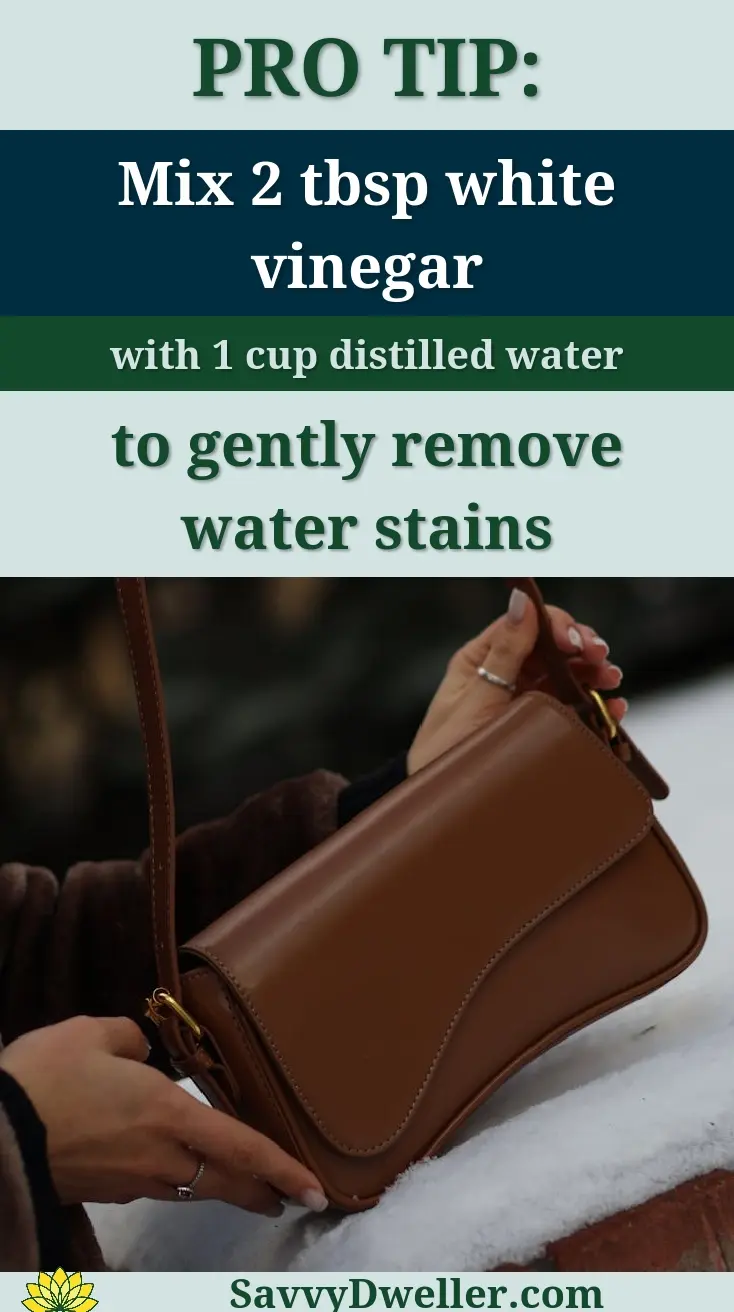
Removing Water Stains
- Identify the ring. Water spots show as dull or dark circles.
- Feather the area. Lightly wipe the stained spot and 1–2 inches beyond with the vinegar mix to even the moisture edge.
- Blot immediately with a dry cloth, pressing from the outer edge inward to prevent new rings.
- Let it dry slowly. Keep the panel flat and out of sun or heat to avoid warping.
- Repeat once if needed, then condition to restore suppleness.
Re-dampening and feathering the panel helps blend the tide line so the spot doesn’t return.
Eliminating Persistent Odors
- Wipe interior and touch points with the vinegar mix as above.
- Place the bag in a breathable bin with an open jar of vinegar nearby (do not let liquid touch the bag), then close the bin 6–12 hours.
- Remove, air out the handbag, and sniff-test. Repeat once if the odor lingers.
- As an optional follow-up, set a small dish of baking soda or a pouch of activated charcoal nearby (not touching) for 12–24 hours.
Vinegar neutralizes odor molecules rather than masking them, which helps when cleaning a leather handbag that smells musty or smoky.
Neutralizing and Conditioning
- Wipe the treated areas with a cloth dampened in plain distilled water to remove residual acidity.
- Air-dry fully. Give it 30–60 minutes with the bag open.
- Apply a thin, even layer of leather conditioner to the treated panels and buff. This restores flexibility and glow.
If you’re charting how to clean leather purses without drying them out, this water-rinse and condition step keeps the finish balanced.
5. The Rubbing Alcohol Stain Removal Technique
Materials and Safety Considerations
Rubbing alcohol (70% isopropyl) can lift dye-based stains like ink and some cosmetics when used sparingly. Work small and stop at the first sign of color transfer from the leather itself.
It’s essential to use the right approach when removing stains from any fabric or leather.
- 70% isopropyl alcohol (rubbing alcohol)
- Microfiber cloths and cotton swabs
- Small glass dish, distilled water
- Leather conditioner and a soft buffing cloth
- Gloves and good ventilation
- Test in a hidden spot first; avoid suede, nubuck, and unfinished/aniline leather.
- Do not use acetone or nail polish remover; they strip finishes fast.
- Keep alcohol away from edge paint and heavy stitching to protect adhesives.
Tackling Different Stain Types
Different stains need different motions, pressure, and contact time. This approach fits how to clean and remove stains from various types of fabric, including a leather handbag when spot-treating without soaking the panel.
Ink Stain Removal
- Blot fresh ink with a dry cloth-no rubbing. Isolate the area so it doesn’t spread.
- Dip a cotton swab in alcohol, then tap it on a paper towel to remove excess.
- Touch the stain’s edge with tiny, quick dabs, working from the outside toward the center. Rotate to a clean swab often.
- Once the ink lifts, immediately wipe the area with a cloth dampened with distilled water to stop the solvent action.
- Pat dry and let it air 10–15 minutes.
- Condition the spot and buff gently.
If leather dye starts to transfer to your swab, stop and switch to a milder method or a pro cleaner. It’s especially important when dealing with fabric—where dye stains can be persistently tricky to remove.
Makeup and Cosmetic Stains
- For powders (blush, bronzer): Brush off dry with a clean, soft brush. Lightly wipe residue with an alcohol-damp cloth, then blot dry.
- For liquid or cream foundation: Lift excess with a plastic card edge, blot, then dab with alcohol on a swab using short taps. Alternate with dry blotting to prevent halos.
- For lipstick or mascara: Lift residue first. If the mark is oily, absorb the oil with a dry cloth before any alcohol dabs to avoid spreading.
- Rinse the area with a distilled-water-damp cloth, pat dry, and let it air before conditioning.
This targeted method supports cleaning a leather handbag without pushing pigments deeper into the grain.
Post-treatment Care
- “Rinse” the treated spot by wiping with a cloth dampened in distilled water.
- Dry carefully. Keep the bag away from heaters; let it breathe 30 minutes.
- Apply a small amount of leather conditioner, allow it to absorb, then buff to even out the sheen.
- If a faint shadow remains, wait 24 hours before a second round. Spacing treatments protects the finish and prevents over-drying.
These steps fit how to clean leather purse stains while keeping the texture smooth-especially helpful when cleaning a leather purse inside where inks and cosmetics tend to land.
6. The Cornstarch Oil Absorption Method
When to Use This Technique
Reach for cornstarch when you spot fresh or set-in oil and grease on finished leather. It’s gentle, absorbent, and won’t scratch your bag’s surface.
Skip this on suede or nubuck, and always spot-test on an inconspicuous area first. If you’re unsure how to clean a leather purse with unknown finishes, test, then proceed slowly.
Application Process
Gather these simple tools first.
- 100% cornstarch (plain, no additives)
- Soft brush or clean makeup brush
- Microfiber cloths
- Painter’s tape or washi tape (to mask nearby hardware/stitching)
- Old credit card or plastic scraper (optional)
Fresh Oil Stains
Act fast so the oil doesn’t travel deeper into the leather’s pores. This quick response makes cleaning a leather bag much easier.
- Blot, don’t rub. Lay a dry microfiber cloth on the spot and press to lift surface oil.
- Mask edges. Use tape to protect hardware and seams from stray powder.
- Dust with cornstarch. Sprinkle a thin, even layer directly over the stain.
- Wait 30–60 minutes. Keep the bag in a warm, dry room away from sun and heat.
- Brush off gently. Use a soft brush or sweep with a clean cloth.
- Repeat once if you still see a halo. Reapply a fresh dusting for another 30 minutes.
Set-In Grease Marks
Stains that have darkened or spread need longer contact time. Let the powder work like a sponge, pulling oil up and out in stages.
- Loosen residue. Very lightly glide a plastic card over the surface to lift any waxy film.
- Apply a thicker layer of cornstarch. Cover the entire mark plus 0.5 inch around it to catch migration.
- Leave 4–12 hours. For stubborn spots, go up to 24 hours in a dry, ventilated room.
- Brush away and assess. If improved but not gone, repeat with a fresh layer.
- Finish when the dark patch fades to the surrounding tone. Avoid overworking the area.
Follow-up Cleaning Steps
After absorbing oil, restore the surface so it looks even and feels smooth. This is the part most people skip when learning how to clean leather handbags.
- Light clean. Dampen a microfiber cloth with a mild soap-and-water solution (or a leather cleaner) and wipe the treated area with short, gentle strokes.
- Dry carefully. Blot with a dry cloth, then air-dry upright away from heat or sun.
- Condition. Apply a small amount of a colorless leather conditioner to rebalance oils and reduce any powdery haze.
- Blend edges. Buff with a clean cloth from the center outward so the finish looks uniform.
7. The Interior Deep Clean System
Cleaning Fabric Linings
Crumbs and lint hold odors, so start here if you’re figuring out how to clean the inside of a purse. Work methodically to avoid pushing grime deeper into pockets and seams.
- Tools: handheld vacuum with brush, lint roller, mild soap, small bowl, soft toothbrush, microfiber cloths, baking soda sachet.
- Empty completely. Check every pocket, card slot, and seam.
- Shake out debris. If the lining pulls out, turn it inside out; if not, hold it open.
- Vacuum on low with a brush attachment, then spot-roll with a lint roller.
- Spot clean. Mix a few drops of mild soap in warm water. Dab stains with a cloth; use a soft toothbrush for corners. Blot with plain water to rinse.
- Deodorize. Place a breathable baking soda sachet inside for 12–24 hours, then remove.
- Air-dry fully with the bag open before refilling.
Addressing Leather Interior Surfaces
Many premium bags have leather-lined interiors that need gentle care. Keep moisture minimal to avoid tide lines and warping.
- Tools: slightly damp microfiber cloth, leather cleaner (if needed), conditioner, cotton swabs.
- Dust first. Wipe with a dry cloth to remove loose particles.
- Clean lightly. If needed, mist a cloth with cleaner and wipe in short, straight strokes.
- Detail edges. Use a barely damp cotton swab along seams and pocket lips.
- Dry open. Let the clean interior air-dry with the bag unzipped.
- Condition sparingly. A pea-sized amount on a cloth is plenty to maintain suppleness.
Hardware and Zipper Maintenance
Shiny, smooth-moving hardware keeps a clean leather purse looking polished. Protect surrounding leather before touching metal polishes or lubricants.
Metal Hardware Care
- Tools: painter’s tape, non-abrasive metal polish (brand-agnostic), cotton swabs, microfiber cloth.
- Mask leather. Tape around clasps, feet, and rings to shield the finish.
- Polish minimally. Apply a rice-grain amount of polish to a swab and treat the metal only.
- Buff dry. Wipe with microfiber until streak-free; remove any residue from edges.
- Unmask and inspect. If any polish touched leather, wipe immediately with a slightly damp cloth.
Zipper Cleaning and Lubrication
- Tools: soft brush, mild soap-and-water, cotton swabs, microfiber cloth, beeswax or zipper wax (graphite pencil for metal teeth).
- Brush debris from teeth and slider.
- Clean with a damp, soapy swab; follow with a water-damp swab to rinse.
- Dry thoroughly with a cloth.
- Lubricate lightly. Rub a tiny bit of beeswax or a graphite pencil on metal teeth; zip and unzip to distribute. Avoid oils that can wick into fabric or leather.
Common Mistakes to Avoid When Cleaning Leather Handbags
Products That Can Damage Your Purse
Certain household products can discolor, dry, or strip leather finishes. When researching how to clean leather purses, steer clear of these.
- Bleach, ammonia, acetone/nail polish remover, and peroxide-based cleaners.
- Disinfecting wipes, magic erasers, and abrasive powders.
- Oils like coconut, olive, or baby oil; they darken leather and attract dirt.
- Undiluted vinegar or alcohol on leather surfaces; they pull dyes and moisture.
- Colored cloths that can transfer dye onto light leather.
Cleaning Technique Errors
Technique matters as much as product choice. Most damage comes from friction and excess moisture.
- Scrubbing instead of blotting, which pushes stains deeper.
- Over-wetting, leading to tide marks and stiffness.
- Skipping spot tests on hidden areas.
- Using stiff brushes on delicate grains or unfinished leather.
- Cleaning in large circles; use short, straight strokes to control edges.
Drying and Storage Mistakes
Good drying habits preserve shape and finish. Heat accelerates cracking and warping.
- Sunlight, radiators, or hairdryers that overheat leather.
- Stuffing with newspaper that can transfer ink; use acid-free tissue.
- Sealing in plastic bins without ventilation; choose a breathable dust bag.
- Hanging by straps long-term, which stretches attachment points; store upright.
When to Seek Professional Help
Some issues need a leather specialist to avoid permanent damage. This protects high-value pieces and saves you from color loss.
- Large or dark grease stains that persist after multiple cornstarch cycles.
- Ink or dye transfer on light leather, especially aniline or unfinished leather.
- Mold, musty odor, or water/salt damage inside or out.
- Peeling topcoat, sticky finishes, or widespread color fade that may need re-dyeing.
- Suede/nubuck interiors, exotic leathers, or hardware corrosion near glued components.
If you’re unsure how to clean a leather handbag without risk-especially for rare or sentimental pieces-get a quote from a pro. Mention areas of concern (oil, ink, odor) so they can tailor safe treatments.

Frequently Asked Questions
How Can I Identify the Type Of Leather My Handbag is Made From?
To identify your leather type, start by examining the texture and finish. Finished leather has a smooth, coated surface that repels water, while unfinished or aniline leather feels more natural and absorbs liquids easily. You can perform a water test: place a drop of water on an inconspicuous area. If it beads up, it’s likely finished; if it absorbs quickly, it’s unfinished. Always check the manufacturer’s tag or website for specific care instructions, as misidentification can lead to damage.
Are There Safe DIY Alternatives to Commercial Leather Conditioners?
Yes, you can make a simple conditioner using equal parts white vinegar and linseed oil, applied sparingly with a soft cloth. This mixture helps moisturize the leather without harsh chemicals. However, test it on a hidden area first to ensure compatibility, as some leathers may react poorly. For regular maintenance, a dab of pure, unscented coconut oil can also work, but avoid over-application to prevent greasiness. In the winter, leather boots often face salt stains that can damage the material. Proper conditioning and quick cleaning can help remove these salt stains and keep the boots looking their best.
How Should I Protect My Leather Purse in Humid Climates?
In humid conditions, leather is prone to mold and mildew. Store your purse in a cool, dry place with good air circulation, and avoid plastic bags that trap moisture. Use silica gel packets in your storage area to absorb excess humidity. Regularly wipe the leather with a dry, soft cloth to remove moisture buildup, and consider applying a leather protector spray designed for humidity resistance.
Can I Use These Cleaning Methods on Vintage Leather Handbags?
Vintage leather requires extra caution due to potential fragility. Always start with the gentlest method, like a dry cloth or mild soap, and avoid harsh chemicals. Test any cleaner on a small, hidden area first. For valuable antique pieces, consult a professional conservator to prevent irreversible damage, as older leather may have unique finishes or weaknesses not found in modern bags.
What Special Care Do Leather Purse Straps Need?
Straps endure the most wear, so clean them more frequently than the body of the bag using a gentle leather cleaner. Focus on removing oils and dirt from handling. After cleaning, condition the straps to prevent cracking and avoid overloading the purse to reduce stress. For adjustable straps, check metal hardware regularly for looseness or corrosion, and lubricate moving parts with a small amount of petroleum jelly if needed.
Closing Thoughts
Your leather handbag deserves the care and attention you’ve just learned to provide. These seven proven methods give you the confidence to tackle everything from daily dirt buildup to stubborn stains without damaging your investment. With the right approach, your purse can maintain its beauty and functionality for years to come.
Start with the gentlest method that suits your specific cleaning needs, and remember that consistency beats intensity every time. Whether you’re dealing with a quick touch-up or a deep clean situation, you now have the knowledge to handle it safely at home.
Ready to put these techniques to work? Pick the method that matches your handbag’s current condition and give it a try today. For more practical home and wellness solutions that actually work, check out Savvy Dwelling where we continue sharing research-backed advice to help you maintain everything you value most.
Additional Resources for You:
- r/handbags on Reddit: How to clean a used purse? Anyone else here with problems buying used?
- Your Purse Is Filthy. Here Are Some Expert-Recommended Ways to Clean It Up. | Reviews by Wirecutter
- How to Clean a Leather Purse
- How I Clean My Leather Handbags at Home the Safe & Easy Way – Styled by Science
- How to Clean a Leather Purse Properly So It Lasts a Lifetime (or Close to It!)