
How to Protect Your Fruit Trees From Pests Using Natural Methods
Watching your carefully tended fruit trees become infested with aphids, scale insects, or codling moths can feel devastating, especially when you’ve invested months nurturing those branches toward a bountiful harvest. You’re not alone in this frustration—pest damage affects nearly 80% of home fruit growers, turning what should be a rewarding gardening experience into a constant battle against unwanted invaders.
The good news is that you don’t need harsh chemicals to reclaim your orchard and protect your family’s health at the same time. This guide reveals seven proven natural pest control methods that work just as effectively as synthetic sprays, giving you the confidence to grow abundant, chemical-free fruit while maintaining the delicate ecosystem balance in your garden.
Contents
- At a Glance: The Best Natural Solutions
- 1. Neem Oil Spray Treatment
- 2. Homemade Insecticidal Soap Spray
- 3. Beneficial Insect Attraction Strategy
- 4. Physical Barrier Protection Methods
- 5. Garlic and Essential Oil Deterrent Sprays
- 6. Companion Planting for Pest Control
- 7. Pheromone Traps and Monitoring System
- The Science Made Simple: Why Fruit Tree Pest Problems Happen
- Common Mistakes to Avoid When Protecting Fruit Trees
- Frequently Asked Questions
- Final Words
- Sources:
At a Glance: The Best Natural Solutions
If you’re dealing with aphids, scale insects, or moths attacking your precious fruit harvest, you’re not alone. These natural methods have proven effective for countless gardeners who want to protect fruit trees from pests naturally without harmful chemicals.
Here’s your quick reference guide to the most reliable natural pest control methods. Each approach targets different types of pests, so combining several techniques gives you the strongest defense. Companion planting is one natural method that can help keep pests at bay.
- Neem Oil Spray: Disrupts pest reproduction cycles and feeding patterns. Works on soft-bodied insects like aphids, mites, and young caterpillars.
- Insecticidal Soap: Breaks down protective waxy coatings on pest insects. Most effective against aphids, whiteflies, and spider mites.
- Beneficial Insects: Natural predators eat harmful pests for you. Ladybugs, lacewings, and parasitic wasps provide ongoing protection.
- Physical Barriers: Block pests from reaching your trees entirely. Sticky bands stop crawling insects, while row covers prevent flying pests.
- Garlic & Essential Oils: Create scent barriers that repel many common pests. Particularly effective against moths, beetles, and some caterpillars.
- Companion Planting: Strategic plant placement naturally deters pests. Marigolds, basil, and nasturtiums confuse or repel harmful insects.
- Pheromone Traps: Monitor and reduce pest populations by interrupting mating cycles. Especially useful for codling moths and oriental fruit moths.
The key to success lies in timing and consistency rather than waiting until pest problems become overwhelming. Start implementing these methods before you see significant damage, and rotate between different approaches to prevent pests from adapting.
Most gardeners find that combining 2-3 methods works better than relying on just one approach. For example, using neem oil monthly while maintaining beneficial insect habitat and installing sticky bands creates multiple layers of protection that help with fruit tree pests throughout the growing season.
1. Neem Oil Spray Treatment
How It Works
Neem oil acts as a natural pesticide by disrupting the life cycle of harmful insects. When pests ingest this oil, it interferes with their hormonal systems, preventing them from molting and reproducing properly. It is widely used in plant care as a natural solution to pest and fungal problems.
The oil creates a protective barrier on leaves and fruit that deters many soft-bodied insects from feeding. Unlike synthetic pesticides, neem oil breaks down naturally and won’t harm beneficial insects when applied correctly.
What You’ll Need
- Pure neem oil (cold-pressed, not extract)
- Mild liquid dish soap (1-2 drops per quart)
- Spray bottle or garden sprayer
- Measuring spoons
- Warm water
Step-by-step Application Instructions
- Mix 2 tablespoons of neem oil with 1 quart of warm water in your spray container.
- Add 1-2 drops of mild dish soap to help the oil mix with water.
- Shake vigorously for 30 seconds to create a uniform mixture.
- Test spray a small section of one leaf and wait 24 hours to check for damage.
- Spray all leaf surfaces, including undersides where pests often hide.
- Apply a light coating to fruit surfaces, avoiding heavy dripping.
- Reapply every 7-14 days or after heavy rainfall.
Best Timing for Application
Apply neem oil spray during early morning or late evening hours when temperatures are below 80°F. Avoid spraying during peak sun hours as the oil can cause leaf burn when combined with intense sunlight.
For maximum effectiveness against specific pests, time your applications to coincide with their vulnerable life stages. Aphids and scale insects respond best to treatment during their active feeding periods in spring and early summer.
Safety Considerations
Always wear gloves and avoid inhaling the spray mist during application. Store unused neem oil mixture for no more than 8 hours, as it breaks down quickly once mixed with water.
Never apply neem oil to drought-stressed trees or when temperatures exceed 85°F. Test on a small area first if you’re treating a new variety of fruit tree, as some species may be more sensitive than others.

2. Homemade Insecticidal Soap Spray
How It Works
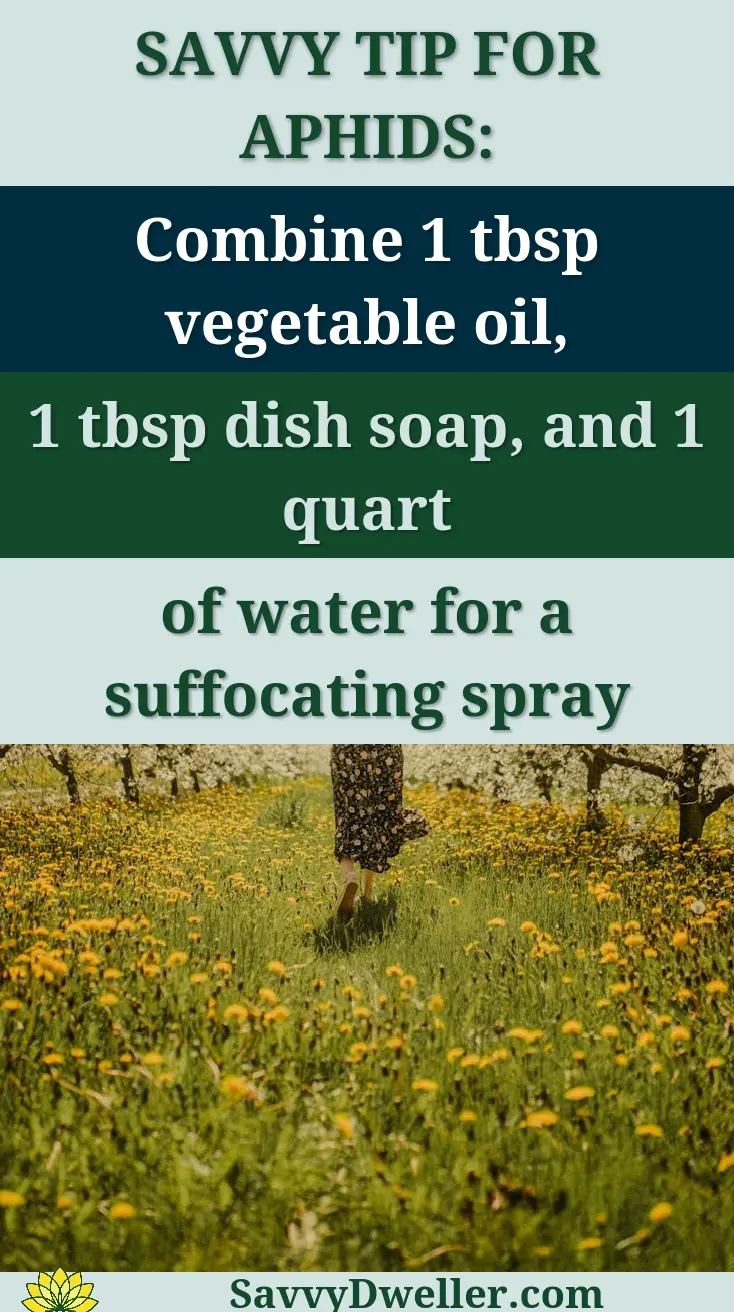
Insecticidal soap works by suffocating soft-bodied pests and dissolving their protective waxy coatings. The soap molecules penetrate the insect’s cell membranes, causing dehydration and death within hours of contact.
This method specifically targets pests while remaining gentle enough for regular use on edible fruit. The soap residue breaks down completely within days, leaving no harmful chemicals on your harvest.
What You’ll Need
- Pure castile soap or mild liquid dish soap (no degreasing agents)
- Soft or distilled water (hard water reduces effectiveness)
- Spray bottle or pump sprayer
- Measuring tablespoons
Step-by-step Mixing and Application
- Combine 2 tablespoons of pure soap with 1 quart of soft water.
- Mix gently to avoid creating excess foam that can clog sprayers.
- Fill your sprayer and test the consistency – it should feel slightly slippery.
- Spray directly onto visible pests and affected areas until thoroughly wet.
- Cover both upper and lower leaf surfaces for complete coverage.
- Rinse treated areas with plain water 2-3 hours after application to prevent soap buildup.
- Repeat applications every 4-7 days until pest populations decline.
Which Pests It Targets Most Effectively
Insecticidal soap excels at controlling aphids, spider mites, whiteflies, and young scale insects. Soft-bodied pests die within 2-3 hours of direct contact, making this one of the fastest-acting natural pest control methods.
The treatment is less effective against hard-shelled insects like beetles or established scale insects with thick protective coatings. For these tougher pests, combine soap sprays with other natural methods for better results.
Also See: Borax for Laundry: The Old-fashioned Cleaning Booster
3. Beneficial Insect Attraction Strategy
How It Works
Creating habitat for beneficial insects establishes a natural pest control system that works around the clock. Predatory insects like ladybugs, lacewings, and parasitic wasps consume thousands of harmful pests throughout their lifespans. To enhance your backyard’s ecosystem, consider incorporating features that attract these helpful insects while also implementing effective natural mosquito control methods.
This biological control method becomes more effective over time as beneficial insect populations establish and reproduce in your garden. Unlike sprays that provide temporary relief, beneficial insects offer ongoing protection season after season.
What You’ll Need to Attract Helpers
- Native flowering plants that bloom in succession
- Shallow water sources (birdbaths, saucers)
- Natural shelter materials (small logs, leaf piles)
- Pesticide-free environment
- Diverse plant species for different beneficial insects
Step-by-step Habitat Creation
- Plant flowering herbs like dill, fennel, and cilantro near your fruit trees.
- Create a shallow water station using a plant saucer filled with pebbles and water.
- Leave small areas of undisturbed ground where beneficial insects can overwinter.
- Install native wildflower patches within 50 feet of your fruit trees.
- Avoid using broad-spectrum pesticides that harm both good and bad insects.
- Maintain bloom succession from early spring through late fall.
- Provide nesting sites like bamboo tubes or drilled wood blocks for solitary bees.
Best Beneficial Insects for Fruit Trees
Ladybugs consume up to 50 aphids per day and are particularly effective against soft-bodied pests. Lacewing larvae, known as “aphid lions,” devour aphids, mites, and small caterpillars with remarkable efficiency. However, if you’re dealing with pantry pests like weevils in your flour, you’ll need different strategies to manage those unwanted guests. Effective solutions are available to help get rid of weevils and protect your pantry supplies.
Parasitic wasps lay eggs inside pest insects, providing long-term population control without any effort on your part. These tiny wasps are harmless to humans but deadly to many fruit tree pests including codling moths and scale insects.
Plants That Attract Natural Predators
Sweet alyssum, yarrow, and marigolds provide nectar sources that beneficial insects need for energy. Plant these flowers in clusters rather than single specimens to create more attractive landing sites.
Native plants work best because they’ve evolved alongside local beneficial insects and provide exactly the resources these helpers need. Consider regional wildflowers, native grasses, and indigenous shrubs to create the most effective beneficial insect habitat.
4. Physical Barrier Protection Methods
How Barriers Work
Physical barriers create an impenetrable shield between your fruit trees and hungry pests. Think of them as invisible force fields that block crawling insects from reaching your tree trunk while keeping flying pests away from delicate fruit and foliage.
These barriers work by disrupting the pest’s natural movement patterns and breeding cycles. Crawling insects like ants, aphids, and scale insects must travel up the trunk to reach leaves and fruit. Flying pests need direct access to lay eggs on branches and fruit surfaces.
What You’ll Need
- Sticky bands or tanglefoot paste
- Fine mesh netting (1/4 inch or smaller)
- Tree wrap or burlap strips
- Scissors or pruning shears
- Cable ties or soft wire
- Measuring tape
- Garden gloves
Step-by-step Installation Guide
Sticky Bands for Crawling Pests
- Measure your tree trunk circumference at chest height
- Cut sticky band material 2 inches longer than the measurement
- Wrap the band around the trunk, overlapping ends by 1 inch
- Press firmly to eliminate air bubbles and gaps
- Check weekly and replace when the surface becomes covered with debris
Position bands 3-4 feet above ground level to catch pests before they reach the canopy. This height prevents beneficial ground insects from getting trapped while stopping tree-climbing pests effectively.
Row Covers and Tree Netting
- Measure your tree’s height and canopy width
- Cut netting 3 feet larger than these measurements in all directions
- Drape netting over the entire tree, starting from the top
- Secure the bottom edges to the ground using rocks or soil
- Leave 6 inches of slack around branches to prevent rubbing
- Remove during bloom period to allow pollinator access
Trunk Guards and Tree Wraps
- Start wrapping at the base of the trunk near soil level
- Overlap each wrap by half the material width
- Continue wrapping up to the first major branch junction
- Secure the top end with soft wire or cable ties
- Check monthly and loosen if the trunk shows signs of constriction
Tree wraps also protect against boring insects that target bark and cambium layers. Replace wraps annually before pest season begins.
5. Garlic and Essential Oil Deterrent Sprays
How Natural Deterrents Work
Garlic and essential oils contain powerful sulfur compounds and aromatic molecules that overwhelm pest sensory systems. These natural chemicals mask the attractive scents that draw insects to your fruit trees while creating an environment pests find deeply unpleasant.
Most insects rely heavily on smell to locate food sources and breeding sites. When you saturate your tree’s surface with these potent natural deterrents, pests become confused and seek easier targets elsewhere.
What You’ll Need
- 6 fresh garlic cloves
- 2 cups hot water
- 1 tablespoon liquid castile soap
- 10-15 drops essential oil (peppermint, rosemary, or thyme)
- Fine mesh strainer or cheesecloth
- Spray bottle (32 oz capacity)
- Blender or food processor
Step-by-step Recipe and Application
- Crush garlic cloves and blend with hot water for 2 minutes
- Let the mixture steep for 24 hours at room temperature
- Strain out all solid particles using fine mesh or cheesecloth
- Add liquid soap and essential oils to the strained liquid
- Mix gently to combine all ingredients evenly
- Transfer to spray bottle and shake before each use
- Spray all leaf surfaces, branches, and trunk areas thoroughly
- Reapply every 7-10 days or after heavy rainfall
Apply early morning or evening when beneficial insects are less active. This timing protects helpful pollinators while maximizing pest deterrent effectiveness.
Most Effective Essential Oil Combinations
Peppermint and rosemary oils work exceptionally well against aphids and soft-bodied insects. The menthol in peppermint disrupts insect respiratory systems while rosemary’s camphor compounds repel flying pests.
Thyme and oregano oils contain thymol and carvacrol, which are particularly effective against scale insects and mites. These compounds penetrate waxy pest coverings that other treatments cannot reach. Additionally, oregano oil is known for its numerous health benefits, making it a valuable addition not just for pest control but also for overall wellness. Exploring the health advantages of oregano oil reveals how it can support various bodily functions and promote a healthy lifestyle.
Cedar and eucalyptus oils excel at deterring moths and beetles. Their woody, medicinal scents interfere with pest mating behaviors and egg-laying preferences.
6. Companion Planting for Pest Control
How Companion Plants Work
Companion plants function as living pest management systems around your fruit trees. Some species release natural chemicals that repel harmful insects, while others attract beneficial predators that hunt tree pests.
This creates a balanced ecosystem where nature does the pest control work for you. Certain plants also improve soil health and provide physical barriers that make it harder for ground-dwelling pests to reach your trees.
What You’ll Need
- Seeds or seedlings of chosen companion plants
- Garden spade or tiller
- Compost or organic matter
- Measuring tape
- Mulch material
- Watering system or hose
- Plant labels for organization
Step-by-step Planting Strategy
- Identify your tree’s drip line (edge of the canopy)
- Plan companion plant locations 3-6 feet from the trunk
- Prepare soil by adding 2 inches of compost
- Plant taller companions on the north side to avoid shading
- Space plants according to their mature size requirements
- Water thoroughly after planting and apply 2-inch mulch layer
- Monitor growth and thin overcrowded areas as needed
Best Companion Plants for Different Fruit Trees
Apple trees benefit tremendously from nasturtiums planted around their base. These colorful flowers trap aphids and woolly apple aphids while their peppery scent deters codling moths.
Citrus trees pair perfectly with lavender and rosemary plantings. These Mediterranean herbs repel citrus leaf miners and scale insects while attracting parasitic wasps. Their drought tolerance also matches citrus water needs perfectly.
Stone fruits like peaches and plums thrive with tansy and marigold companions. Tansy releases compounds that deter ants and aphids, while marigolds produce chemicals toxic to nematodes in the soil.
Spacing and Placement Guidelines
Plant small herbs like thyme and oregano 18 inches apart in clusters of 3-5 plants. This creates concentrated scent zones that maximize pest deterrent effects.
Position taller companions like sunflowers and cosmos 4-6 feet from tree trunks. This distance prevents root competition while allowing beneficial insects easy movement between plants.
Create pathways between companion plant groupings for maintenance access. Leave 2-3 foot walkways so you can reach your fruit tree for pruning and harvesting without disturbing the protective plant barrier.
7. Pheromone Traps and Monitoring System
How Traps Work
Pheromone traps use synthetic versions of natural insect mating scents to lure specific pests. Male insects follow these chemical signals, thinking they’re tracking down potential mates, only to get stuck in the trap’s adhesive surface.
Think of it like a decoy system that interrupts the pest’s life cycle. When you capture adult males before they can reproduce, you dramatically reduce the next generation of fruit-damaging insects on your trees.
What You’ll Need
- Species-specific pheromone lures (replace every 4-6 weeks)
- Delta-style or wing traps with sticky inserts
- Weather-resistant trap housings
- Mounting hardware or stakes
- Data recording sheet or smartphone app
- Magnifying glass for pest identification
Step-by-step Setup and Monitoring
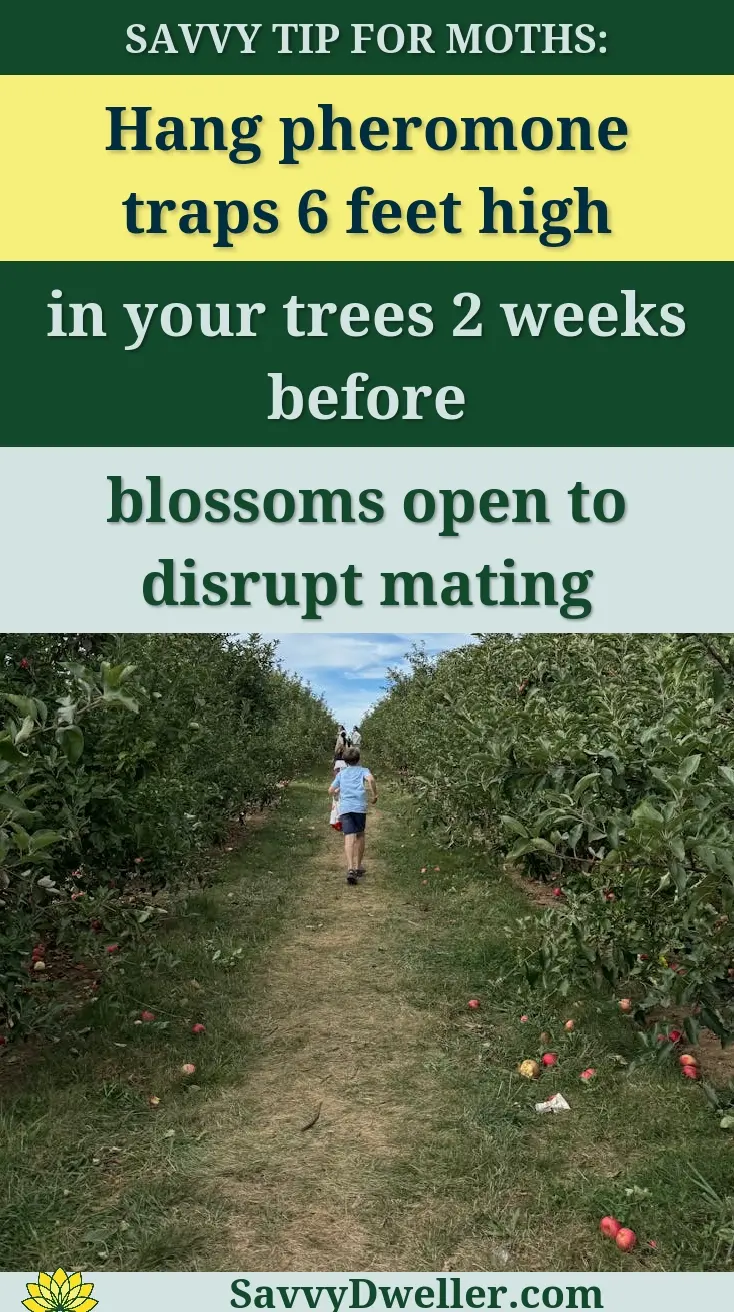
- Install traps 4-6 feet high on stakes or tree branches, positioning them at the canopy edge where pests typically enter.
- Place traps 30-50 feet apart around your orchard perimeter, using wind direction to your advantage.
- Record installation date and weather conditions on your monitoring sheet.
- Check traps weekly during peak pest seasons, counting and identifying captured insects.
- Replace sticky inserts when they’re full or lose adhesion, typically every 2-3 weeks.
- Document pest numbers, species types, and any patterns you notice over time.
Best Trap Types for Common Pests
Codling moth traps work exceptionally well for apple and pear trees, using a specific pheromone that peaks in effectiveness during spring emergence. Position these traps by early April in most climates to catch the first generation before they lay eggs in developing fruit.
Oriental fruit moth traps target stone fruits like peaches and plums. These pests have multiple generations per year, so continuous monitoring from late spring through early fall gives you the complete picture of their activity cycles.
Apple maggot traps use both pheromones and visual attractants – red spheres that mimic ripe fruit. Hang these in mid-June when adult flies begin emerging from soil pupation sites.
Reading and Interpreting Trap Results
Low trap counts (1-5 insects per week) indicate manageable pest pressure where preventive measures should suffice. Moderate catches (6-15 per week) signal the need for immediate intervention with natural sprays or other control methods.
High trap counts exceeding 15-20 insects weekly mean you’re dealing with a significant infestation that requires multiple control strategies working together. Don’t rely on traps alone at this point.
Track your data over multiple seasons to identify pest emergence patterns. Most fruit tree pests follow predictable cycles tied to temperature accumulation, giving you powerful timing advantages for future protection efforts.
The Science Made Simple: Why Fruit Tree Pest Problems Happen
Natural Pest Cycles and Seasonal Patterns
Fruit tree pests operate on biological clocks synchronized with seasonal temperature changes. Most overwinter as pupae in soil or bark crevices, then emerge when accumulated heat units reach specific thresholds – usually coinciding with bud break and fruit development.
Understanding these cycles transforms your pest control from reactive to proactive. Codling moths, for example, require 220 degree-days above 50°F to complete their first emergence, giving you a precise timing window for protective measures.
Peak pest activity typically occurs during the rapid fruit development phase when trees are most vulnerable and attractive to insects. This creates a predictable window where your natural protection methods will be most effective.
How Tree Health Affects Pest Resistance
Healthy fruit trees produce natural defensive compounds that make them less appealing to pests. Well-nourished trees with adequate water and proper pruning develop thicker cell walls and higher concentrations of deterrent chemicals in their tissues.
Stressed trees emit chemical signals that actually attract certain pests – it’s nature’s way of targeting weakened plants for removal. Poor soil drainage, nutrient deficiencies, and drought stress all compromise your tree’s natural defense mechanisms.
Root health drives above-ground pest resistance more than most gardeners realize. Strong root systems support vigorous growth that can tolerate moderate pest damage without significant fruit loss.
Environmental Factors That Attract Pests
Warm microclimates created by south-facing walls, concrete surfaces, or dense vegetation concentrations accelerate pest development and increase population pressure on nearby fruit trees. These heat islands can advance pest emergence by 7-14 days compared to cooler areas.
Poor air circulation around fruit trees creates humid conditions that favor soft-bodied pests like aphids and scale insects. Overcrowded plantings or inadequate pruning trap moisture and reduce the effectiveness of beneficial insects that need airflow for navigation.
Nearby wild host plants often serve as pest reservoirs that continuously replenish your fruit tree problems. Wild cherries, crabapples, and abandoned fruit trees within a half-mile radius can harbor overwintering pest populations that migrate to your managed trees.
Common Mistakes to Avoid When Protecting Fruit Trees
Timing Application Errors
Applying natural pest control treatments too early wastes materials and misses target pests entirely. Many gardeners start spraying at the first sign of spring warmth, but most fruit tree pests haven’t emerged from their winter hiding spots yet.
The most critical timing mistake is treating symptoms instead of anticipating pest emergence cycles. By the time you see visible damage, the current generation has already completed its most destructive feeding phase.
Late-season applications often prove ineffective because mature insects are focused on reproduction and overwintering preparation rather than feeding. Your natural deterrents work best during active feeding periods when pests are most vulnerable to disruption.
Over-spraying and Chemical Mixing Issues
Even natural pest control products can harm beneficial insects when applied excessively or at inappropriate concentrations. Heavy-handed neem oil applications suffocate beneficial mites and parasitic wasps alongside target pests, disrupting your tree’s natural pest management system. To foster a balanced ecosystem, it’s essential to attract beneficial insects, like ladybugs, to your garden. Ladybugs are great allies in pest control and can help keep harmful pests in check.
Mixing multiple natural products without understanding their interactions creates unpredictable results. Soap-based sprays can break down essential oil effectiveness, while certain combinations may cause leaf burn or fruit spotting on sensitive varieties.
Calendar-based spraying schedules ignore weather conditions that affect product performance and pest behavior. Rain within 24 hours washes away most natural treatments, while extreme heat can concentrate oils to phytotoxic levels.
Neglecting Tree Health Fundamentals
Focusing exclusively on pest control treatments while ignoring basic tree care creates an endless cycle of problems. Poor pruning practices that leave water sprouts and suckers provide perfect pest breeding sites that no amount of spraying can overcome.
Inadequate soil management undermines every other pest control effort. Compacted soil, poor drainage, and nutrient imbalances stress trees and make them more attractive to pest insects seeking weakened hosts.
Skipping dormant season cleanup allows overwintering pest populations to explode the following spring. Fallen fruit, leaf litter, and pruned branches harbor pest eggs and pupae that emerge when conditions warm.
Ignoring Early Warning Signs
Waiting for obvious pest damage before taking action means you’ve missed the most effective intervention window. Early indicators like unusual leaf curling, premature fruit drop, or increased ant activity around trees signal developing pest problems that are easier to address immediately.
Dismissing small pest populations as harmless allows exponential reproduction that quickly overwhelms natural control methods. A few aphids in May become thousands in June under favorable conditions, requiring much more intensive management.
Failing to monitor beneficial insect populations leaves you blind to the effectiveness of your natural pest control ecosystem. Healthy fruit trees should show evidence of predator activity – look for ladybug larvae, lacewing eggs, and parasitized pest insects as signs your biological controls are working.
Frequently Asked Questions
How Do I Choose the Right Natural Pest Control Method for My Specific Fruit Tree?
Start by accurately identifying the pest through close inspection of damage patterns, such as chewed leaves or bore holes, which will guide your method selection. For instance, soft-bodied insects like aphids respond well to insecticidal soap, while moths or beetles may require pheromone traps or physical barriers. Consider the tree species-citrus trees often benefit from neem oil for scale insects, whereas apple trees might need companion planting with marigolds to deter pests like aphids.
Additionally, factor in the infestation severity and tree health. Mild issues can often be resolved with single methods like homemade sprays, but severe cases may need an integrated approach, such as combining beneficial insects with deterrent plants. Always opt for the least disruptive method first to maintain ecological balance and avoid harming pollinators.
Can Natural Pest Control Methods Be Used in Conjunction With Each Other?
Yes, many natural methods can be layered for better results, but prioritize compatibility to prevent plant stress. For example, you can safely use sticky bands on trunks alongside companion planting, as they target different pest types without interference. However, avoid applying multiple sprays (e.g., neem oil and garlic spray) on the same day-space them out by at least 48 hours to check for adverse effects.
Focus on synergistic pairs, like attracting ladybugs while avoiding broad-spectrum sprays that could harm them. Test combinations on a small branch first, and monitor tree response. Integrating methods such as barriers for crawling pests and traps for flying insects often provides comprehensive protection without overlap. Additionally, adopting natural solutions can help in managing pests like Japanese beetles, enhancing the overall health of your garden.
What Should I Do if Natural Methods Don’t Seem to Be Working?
First, reassess application details: ensure proper timing, such as spraying at dusk when pests are active, and full coverage of all tree parts. Environmental factors like heavy rain or extreme heat can reduce effectiveness, so reapply after weather events. Also, verify that you’re targeting the correct pest-misidentification can lead to using ineffective methods.
If issues persist, rotate between different natural techniques to prevent pest adaptation, such as switching from soap sprays to essential oil deterrents. Increase monitoring frequency with traps to catch early signs of resurgence, and consider enhancing tree health through soil amendments to improve natural resistance. For stubborn cases, consult local gardening experts for region-specific advice.
Are There Natural Ways to Prevent Pests Without Using Sprays?
Absolutely-focus on cultural practices like strategic pruning to remove infested branches and improve air flow, which discourages pest settlement. Maintain soil health with organic mulch and compost to strengthen the tree’s innate defenses, reducing its attractiveness to pests.
Physical interventions are key: install tree wraps or netting before peak pest seasons to block access, and use companion plants like chives or garlic around the base to repel insects naturally. Encouraging a diverse garden ecosystem with birdhouses or insect hotels can also provide long-term, spray-free prevention by supporting natural predators. Incorporating mosquito-repelling plants into your garden can enhance these efforts, making outdoor spaces more enjoyable. Some effective varieties to consider include lavender, citronella, and marigolds, which help keep pests away while beautifying your patio.
Final Words
Your fruit trees can thrive without harmful chemicals when you use these proven natural methods consistently. The key to success lies in combining multiple approaches and staying vigilant throughout the growing season. Start with one or two methods that feel most manageable, then gradually build your natural pest protection system as you gain confidence.
Remember that healthy trees naturally resist pests better, so focus on proper watering, soil health, and pruning alongside these protective measures. Most gardeners see significant improvements within just a few weeks of implementing these natural strategies. Your patience and persistence will reward you with healthier fruit and a safer environment for your family.
Ready to transform your fruit tree care routine? Check out Savvy Dwelling for more expert gardening tips and natural home solutions that actually work. Start with the method that appeals to you most, and watch your trees flourish naturally.
Sources:
- How to Control Common Fruit-Tree Pests | IFA’s Helping to Grow Blog
- Protecting Fruit Trees from Insects and Diseases Post-Webinar Q&A | Extension
- How to Treat Fruit Trees Organically: When to Spray for Disease – Melissa K. Norris
- How to keep bugs off fruit trees naturally: Five Easy Strategies
- How to Keep Bugs Off Apple Trees Naturally – A Guide — Raintree Nursery