The Best Way to Get Rid Of Hard Water Stains on a Stainless Steel Sink
Staring at those stubborn white spots and cloudy mineral deposits covering your once-gleaming stainless steel sink? You’re not alone in this frustrating battle against hard water stains that seem to reappear faster than you can scrub them away. These chalky buildups don’t just look unsightly—they make your entire kitchen feel less clean, no matter how much effort you put into maintenance.
After extensive research and testing countless methods, we’ve identified the most effective techniques that actually work to restore your sink’s mirror-like finish. This guide breaks down five proven methods—from simple pantry ingredients to specialized products—giving you multiple solutions to choose from based on what you have available. You’ll finally have a spotless sink that stays cleaner longer, transforming one of your kitchen’s hardest-working surfaces back into something you can feel proud of.
Contents
- At a Glance: The Best Solutions
- The Science Made Simple: Why Hard Water Stains Happen on Stainless Steel
- 1. The White Vinegar Method
- 2. The Baking Soda Paste Technique
- 3. The Lemon and Salt Power Combo
- 4. The Commercial Cleaner Approach
- 5. The Cream Of Tartar Solution
- 5 Habits to Keep Hard Water Stains From Coming Back
- Frequently Asked Questions
- Final Words
At a Glance: The Best Solutions
You’ve probably tried scrubbing those stubborn water spots with dish soap, only to find them reappearing within hours. The best way to remove hard water stains from stainless steel involves using mild acids that dissolve mineral deposits without damaging the surface. For faucets and showerheads, mineral buildup can be particularly stubborn. Using a vinegar solution or specialized descalers can effectively eliminate those hard water stains and restore shine.
We’ve tested multiple approaches and found five methods that consistently deliver results. Each technique targets different types of buildup, from light water spots to thick, chalky deposits that seem impossible to budge.
Quick Comparison Table
| Method | Best For | Time Required | Cost | Difficulty |
|---|---|---|---|---|
| White Vinegar | Light to moderate stains | 10-15 minutes | Under $2 | Easy |
| Baking Soda Paste | Stubborn buildup | 15-20 minutes | Under $1 | Easy |
| Lemon and Salt | Fresh stains and polishing | 5-10 minutes | Under $3 | Very Easy |
| Commercial Cleaner | Heavy-duty stains | 5-15 minutes | $5-15 | Easy |
| Cream of Tartar | Thick mineral deposits | 20-25 minutes | $3-5 | Moderate |
The white vinegar method works best for most households because it removes hard water stains from stainless steel sink surfaces while being gentle enough for daily use. Commercial cleaners excel at tackling severe buildup but require proper ventilation and careful handling.
Choose your method based on stain severity and available time. Light daily water spots respond well to the lemon and salt combo, while thick, chalky deposits need the stronger action of cream of tartar or specialized cleaners.
The Science Made Simple: Why Hard Water Stains Happen on Stainless Steel
Understanding Mineral Buildup
Hard water contains dissolved minerals like calcium and magnesium that create those stubborn white, chalky deposits on your stainless steel sink. When hard water evaporates, these minerals remain behind, forming crystalline structures that bond tightly to the metal surface.
The mineral concentration in hard water can range from 120 to over 300 parts per million, making some areas far more prone to severe buildup than others. These minerals don’t just sit on the surface-they actually create microscopic etchings that make future stain removal increasingly difficult.
Why Stainless Steel Attracts Water Spots
Stainless steel’s smooth, non-porous surface might seem like it would repel stains, but it actually creates perfect conditions for mineral deposits. The metal’s slight electrical conductivity attracts positively charged mineral particles, while its reflective properties make even small deposits highly visible.
Water naturally beads on stainless steel rather than forming a uniform film, creating concentrated mineral deposits when those droplets evaporate. This beading effect explains why your sink develops those distinctive circular water spots that seem impossible to prevent. Over time, these spots can lead to rust stains, which can be a real eyesore in your bathroom. Learning how to remove rust stains from bathtubs and sinks can help keep your fixtures looking clean and new.
1. The White Vinegar Method
What You’ll Need
- White distilled vinegar (5% acidity minimum)
- Spray bottle or clean cloth
- Soft-bristled toothbrush or non-abrasive sponge
- Microfiber cloths (at least 2)
- Warm water for rinsing
Step-by-step Instructions
Preparing the Vinegar Solution
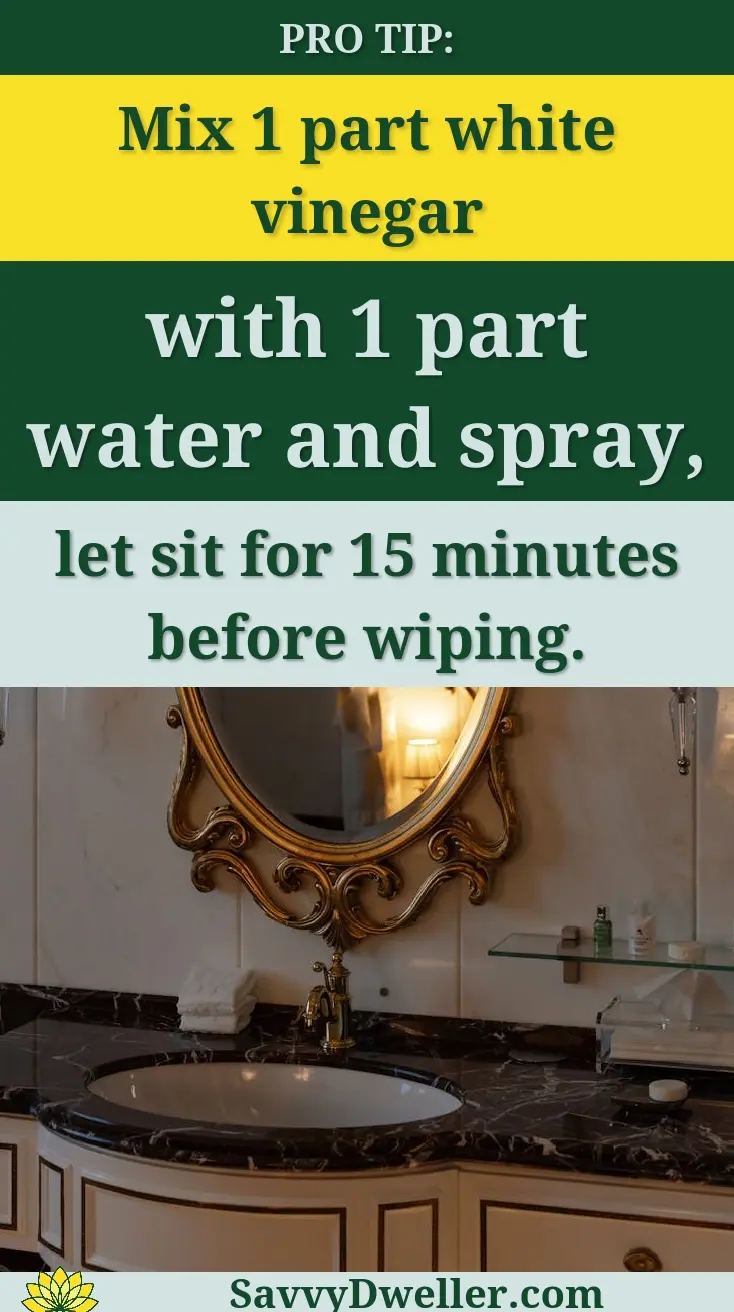
Pure white vinegar works best for removing hard water stains from stainless steel sinks because its 5% acetic acid content effectively dissolves mineral buildup without damaging the metal surface. Avoid diluting the vinegar for maximum effectiveness against stubborn deposits. For anyone dealing with similar hard water stains on glassware dishes, vinegar can also be an effective solution for restoring their shine and clarity.
Pour the vinegar into a spray bottle for even application, or saturate a clean cloth if you prefer direct contact. Room temperature vinegar works perfectly—heating isn’t necessary and may create unpleasant fumes. For a simple and effective solution, consider making an all-purpose cleaning spray with vinegar. This versatile cleaner can tackle a variety of surfaces and dirt types, making your cleaning routine easier and more efficient.
Application and Scrubbing Technique
- Spray or apply vinegar generously to cover all stained areas completely
- Allow the vinegar to sit for 10-15 minutes to penetrate mineral deposits
- Gently scrub in circular motions using a soft-bristled toothbrush for textured stains
- Work with the grain of the stainless steel to avoid creating new scratches
- Apply additional vinegar to particularly stubborn spots and let sit another 5 minutes
Final Rinse and Dry
- Rinse thoroughly with warm water to remove all vinegar residue
- Dry immediately with a clean microfiber cloth to prevent new water spots
- Buff the surface in the direction of the steel’s grain for a streak-free finish
- Inspect for any remaining spots and repeat the process if needed
Also See: The Best Plants That Naturally Purify the Air and Reduce Odors
2. The Baking Soda Paste Technique
Materials Required
- Baking soda (sodium bicarbonate)
- Water or white vinegar for mixing
- Small mixing bowl
- Soft cloth or non-abrasive sponge
- Plastic scraper or old credit card
- Clean microfiber towels
Creating the Perfect Paste Consistency
The ideal baking soda paste should have a thick, spreadable consistency similar to toothpaste-not too runny that it slides off, but not so thick that it crumbles when applied. Start with three parts baking soda to one part liquid and adjust as needed.
Mix with water for general cleaning, or combine with white vinegar for extra cleaning power against severe mineral buildup. The slight fizzing reaction when mixing with vinegar helps lift stubborn deposits more effectively. This is especially useful when removing mineral buildup from coffee makers.
Application Process
Gentle Scrubbing Motion
- Apply the paste evenly over stained areas using a soft cloth
- Let the paste sit for 15-20 minutes to allow the alkaline properties to break down mineral deposits
- Gently scrub using circular motions, focusing on heavily stained areas
- Use light pressure to avoid scratching the stainless steel surface
- Work systematically across the entire sink to ensure even treatment
Removing Stubborn Spots
- Apply additional paste to persistent stains and extend the sitting time to 30 minutes
- Use a plastic scraper to gently remove built-up deposits without scratching
- Rinse the area and assess progress before repeating if necessary
- Thoroughly rinse all paste residue with warm water
- Dry completely with a microfiber cloth, buffing in the direction of the steel’s grain
3. The Lemon and Salt Power Combo
Supplies Needed
- 1 fresh lemon (or bottled lemon juice without pulp)
- Kosher or fine sea salt (avoid rock salt)
- Soft sponge or non-scratch pad
- Microfiber cloths (one damp, one dry)
- Small bowl and spoon (for mixing, optional)
- Nylon detail brush or old soft toothbrush (for seams and around the faucet)
How the Citric Acid Works
Citric acid grabs onto the calcium and magnesium in hard water deposits, loosening the chalky film so it wipes away. That’s why it’s one of the best ways to remove hard water stains from stainless steel without harsh chemicals.
It’s also effective on other surfaces, such as toilets and bathroom fixtures.
Salt adds a gentle grit, so you can clean hard water stains from a stainless steel sink without scratching. Keep contact time short and pressure light to protect the brushed grain.
Application Steps
- Rinse the basin with warm water to float off loose grit. Wipe once with a damp microfiber.
- Cut the lemon and squeeze juice over the hard water stains on a stainless steel sink, especially around the drain and faucet base.
- Sprinkle a light, even layer of salt onto the wet areas. Aim for “wet sand” coverage, not a thick pile.
- Using a soft sponge, rub along the steel grain with gentle pressure. Work in small sections for better control.
- Let the lemon sit for 2–3 minutes on stubborn spots. Reapply juice if it starts to dry.
- Detail edges, seams, and around the faucet with a nylon brush using short, with-the-grain strokes.
- Rinse thoroughly with warm water to remove all salt and lemon residue.
- Inspect under bright light. Repeat the quick rub on any remaining hard stains on the sink.
- Dry completely with a clean microfiber to stop new spots from forming as the water evaporates.
Creating the Natural Abrasive
- Add 2 tablespoons of salt to a small bowl.
- Mix in 1–2 tablespoons of lemon juice until it forms a loose paste (like wet sugar).
- Apply the paste to stains and glide the sponge with the grain. Adjust with more juice if it feels too dry.
Buffing and Polishing
- After rinsing and drying, mist a microfiber with water or a drop of food-grade mineral oil.
- Buff with the grain in long, even passes to lift faint water lines and restore the sheen.
- Flip to a dry side and do a final pass. That quick buff helps get rid of hard water stains on a stainless steel sink and keeps the finish looking uniform.

4. The Commercial Cleaner Approach
Best Products for Hard Water Stains
- Oxalic acid cleansers: Bar Keepers Friend Soft Cleanser or Powder Cleanser (great for removing hard water stains from stainless steel sink when used briefly and rinsed well).
- Citric/lactic/sulfamic acid descalers labeled safe for stainless: CLR (Stainless-safe versions), Lime-A-Way Gel, or similar “lime/calcium/rust” removers.
- Phosphoric acid stainless-safe descalers: Check label specifically for “stainless steel.”
- Non-scratch tools: White non-scratch pads, soft sponges, or a lightly used melamine foam with feather-light pressure.
- Finishing polishes: Stainless steel cleaner/polish sprays (e.g., Weiman or Therapy) to even out the grain after descaling.
Choose products that say “safe for stainless steel,” and avoid anything with chlorine bleach or muriatic acid. Those can pit and discolor the surface.
Safety Considerations
- Wear gloves and avoid splashes to the eyes and nearby surfaces.
- Do not mix products. Never combine acids with bleach or ammonia.
- Keep acids off natural stone countertops; cover edges with a towel if needed.
- Limit dwell time; strong acids can haze the finish if left too long.
- Patch test on a hidden corner behind the faucet before full use.
Proper Application Method
- Wet the sink lightly. A damp surface spreads product more evenly and reduces scratching.
- Apply a small amount of cleaner directly to stains or onto a sponge as directed by the label.
- Spread with the grain using light, even strokes. Agitate for 15–30 seconds.
- Let it sit only as long as the label allows-usually 1–3 minutes for descalers, up to 1 minute for oxalic cleansers.
- Re-agitate briefly. Add a few drops of water if it starts to dry on the surface.
- Rinse thoroughly with plenty of water. Wipe with a damp microfiber to ensure residue is gone.
- Dry completely. Drying is the best way to get rid of hard water stains onsite before they re-form as the water flashes off.
- Finish with a stainless polish if you want a uniform, fingerprint-resistant sheen.
Reading Product Labels
- Look for: “Safe for stainless steel,” listed active acids (oxalic, citric, lactic, sulfamic, phosphoric), and dwell time limits.
- Avoid: “Contains bleach,” “chloride,” or “for masonry/toilet only.”
- Check tool guidance: “Use soft cloth” or “non-scratch pad only.”
- Note any warnings for black/colored stainless or coated finishes.
Ventilation Requirements
- Open a window and run the kitchen exhaust fan while using acidic descalers.
- Keep pets and kids out of the area until the sink is rinsed and dried.
- Work in short sessions to reduce fumes; close bottles promptly after dispensing.
5. The Cream Of Tartar Solution
What Makes This Method Effective
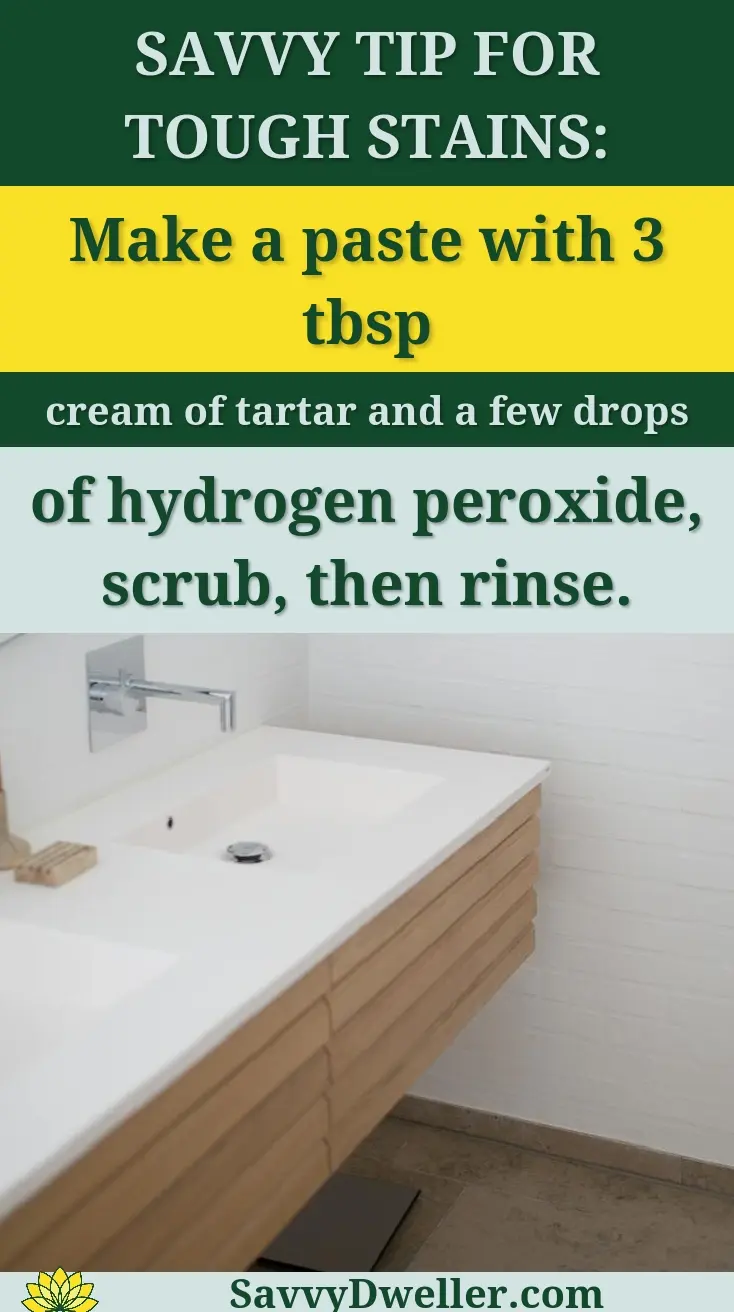
Cream of tartar (potassium bitartrate) is a mild acid in a very fine powder, so it both loosens mineral scale and provides gentle polishing. It’s ideal when you want to remove hard water stain from a stainless steel sink without risking scratches.
It clings better than thin liquids, which helps on vertical walls and around the drain ring. The finish looks bright, not hazy.
Mixing Instructions
- Base paste: 2 tablespoons cream of tartar + 1 tablespoon water.
- For extra bite: swap water for lemon juice to boost the chelating power.
- Consistency: aim for toothpaste-thick so it stays where you put it.
- Mix fresh each time; discard leftovers.
Application and Removal Process
- Dampen the sink and a soft sponge.
- Spread the paste over hard water stains on a stainless steel sink, following the grain.
- Let sit 5–10 minutes so the mild acid can work on the mineral film.
- Gently rub with the grain. Use a soft toothbrush along the drain edge and around the faucet.
- Rinse very well and wipe with a damp microfiber to lift any lingering powder.
- Dry fully. Rinse and dry are the best way to clean hard water stains off a stainless steel sink without new spots forming.
5 Habits to Keep Hard Water Stains From Coming Back
Daily Maintenance Routine
- After the last use, give the basin and faucet a quick rinse to wash away soap film and minerals.
- Wipe dry with a microfiber in 20–30 seconds, moving with the grain.
- Keep a small towel hooked nearby so drying becomes automatic-this simple step removes hard water stains before they start.
Weekly Deep Cleaning Schedule
- Do a 5–10 minute descale of the drain ring, seams, and faucet base using your preferred method for removing hard water stains from stainless steel sink.
- Brush the faucet aerator screen and the caulk line where minerals collect.
- Finish with a quick buff to even the grain so new spots are less noticeable.
Water Softening Solutions
- Whole-house ion-exchange softener: swaps calcium/magnesium for sodium or potassium, which dramatically reduces hard water stains on a stainless steel sink.
- Under-sink options: a small inline polyphosphate cartridge can keep minerals suspended and reduce spotting.
- Pro tip: Fill a spray bottle with distilled water and do a final rinse after cleaning; it’s a fast way to get rid of hard water stains on a stainless steel sink by avoiding new deposits.
- Electronic/magnetic “descalers” have mixed results; consider them only after reading independent testing.
Proper Drying Techniques
- Use a clean, lint-free microfiber or waffle-weave towel. Blot puddles, then wipe with the grain.
- Avoid air-drying; evaporating droplets leave minerals behind and cause water spots.
- For a spotless look, mist with distilled water, then dry-simple and effective for how to remove water stains from sink areas long-term.
Protective Coating Options
- Food-grade mineral oil: 2–3 drops on a microfiber, then buff with the grain. A hair-thin film makes water bead and wipes away easier.
- Appliance wax with carnauba: monthly light coat on walls and around the faucet (avoid the floor of the basin to prevent slipperiness).
- Stainless polish sprays: silicone-based protectants help with removing hard water stains from stainless steel sink during routine wipes.
- Avoid cooking oils; they oxidize and get sticky.
Frequently Asked Questions
Can Hard Water Stains Cause Permanent Damage to My Stainless Steel Sink?
Generally, hard water stains are surface-level mineral deposits and do not cause permanent damage like corrosion or pitting if cleaned regularly. However, if left untreated for long periods, the buildup can etch the surface or trap moisture, potentially leading to minor discoloration. To avoid this, clean stains promptly using gentle methods like vinegar or baking soda to preserve the sink’s finish.
What Household Items Should I Avoid When Cleaning Hard Water Stains on Stainless Steel?
Avoid harsh abrasives like steel wool or gritty cleansers, as they can scratch the sink’s surface and make it more prone to future staining. Also, steer clear of bleach or ammonia-based cleaners, which can discolor stainless steel and react poorly with other agents. Instead, stick to non-abrasive tools like soft cloths or sponges and pH-neutral solutions for safe, effective cleaning. Regular maintenance of your kitchen sink drain is essential to prevent clogs. Following a cleaning kitchen sink drain guide can help keep your sink functioning efficiently.
Is It Safe to Mix Different Cleaning Agents, Such As Vinegar and Bleach?
Never mix vinegar with bleach or ammonia, as this can produce toxic chlorine gas, posing serious health risks. Even when using DIY methods separately, always rinse the sink thoroughly between applications to prevent chemical reactions. For safety, use one cleaning agent at a time and ensure proper ventilation when handling strong chemicals.
How Can I Clean Hard Water Stains on Sink Fixtures or Drains Without Damaging Them?
For fixtures like faucets, use a soft-bristled brush dipped in vinegar to gently scrub mineral buildup, avoiding abrasive pads that could scratch finishes. For drains, apply a paste of baking soda and water around the edges, then rinse carefully to prevent clogs. Always test a small, hidden area first to ensure compatibility with the fixture material.
Final Words
Your stainless steel sink doesn’t have to be a victim of hard water stains anymore. With these proven methods-from the gentle white vinegar approach to the powerful cream of tartar solution-you now have a complete arsenal to tackle even the most stubborn mineral buildup. The key is choosing the right method for your specific stain level and maintaining consistent prevention habits.
Start with the mildest approach that matches your situation, and remember that prevention is always easier than removal. Those simple daily habits we covered will save you hours of scrubbing down the road. Your sink will thank you with that brilliant, streak-free shine that makes your entire kitchen look cleaner.
Ready to transform your sink today? Pick your preferred method and give it a try-you’ll be amazed at the results. For more game-changing home solutions and wellness tips that actually work, explore Savvy Dwelling where we share the strategies that make daily life easier and healthier.
Useful References for You:
- The Best Guide on How to Clean a Stainless Steel Sink Effortlessly – Ruvati USA
- How to Remove Hard Water Stains From Every Surface
- How to Clean Stainless Steel Sink Hard Water Stains | Angi
- How to Remove Hard Water Stains From All Surfaces (2025 Guide)
- r/CleaningTips on Reddit: Any tips on how to clean the hard water stains off my sink?